How Sifan Hassan Trains (One Engine, From 1500m to the Marathon)
Sifan Hassan medals from 1500m to the marathon. The range behind it, and how one race result predicts your time at every other distance.
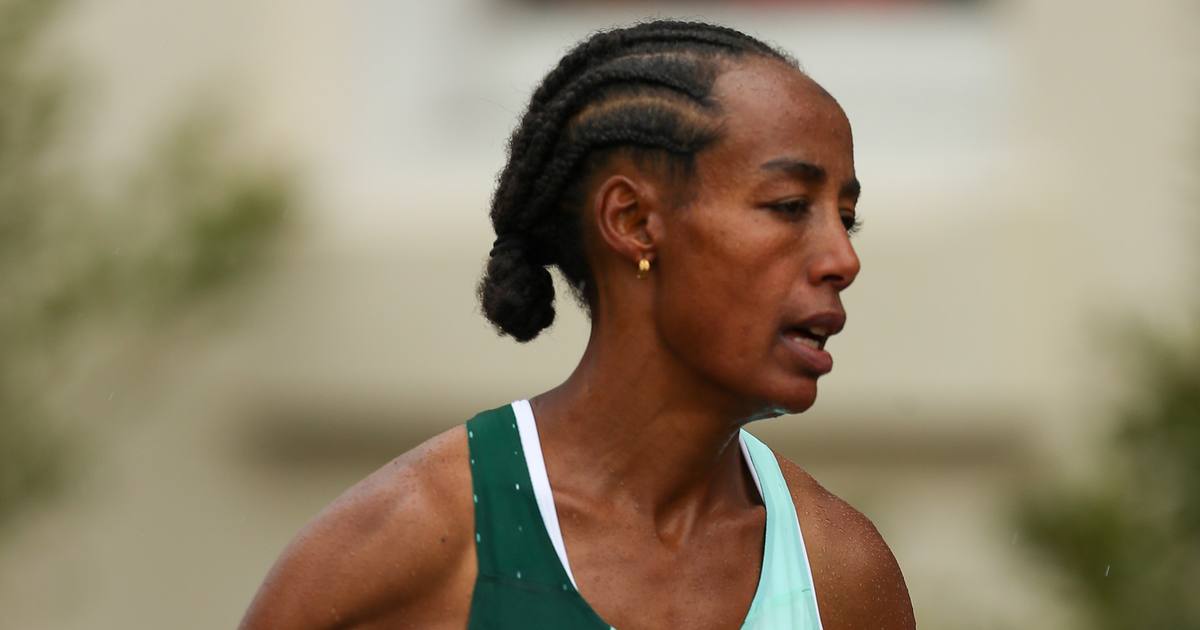
At the Tokyo Olympics, Sifan Hassan medalled in the 1500m, the 5000m and the 10,000m, the only athlete ever to medal across a middle-distance event and both long-distance races at one Games. Three years later in Paris she won the marathon in an Olympic record and added bronze in the 5000m and 10,000m. No one else has combined that range. She is the best living demonstration of one principle: these distances are one engine running at different speeds.
A range nobody else has
Hassan's personal bests span the distance spectrum: 3:51.95 for 1500m, a 4:12.33 mile that was once the world record, 14:13.42 for 5000m, 29:06.82 for 10,000m, and a 2:13:44 marathon. She won the 1500m and 10,000m at the same 2019 World Championships, the only athlete ever to do it.
She is Dutch, born in Ethiopia, and coached since 2018 by Tim Rowberry. She refuses to specialise. The aerobic engine underneath is the same whether she is closing a 1500m or grinding out a marathon.
One engine, read across the table
Your fitness at one distance implies your fitness at every other, because all of them draw on the same aerobic base with different amounts of speed and endurance on top. A race-time predictor makes that concrete:
Your 10K
45:00
4:30 /km
Predicted equivalent times
| 5K4:19 /km | 21:35 |
| 10KRecommended4:30 /km | 45:00 |
| Half marathon4:42 /km | 1:39:17 |
| Marathon4:54 /km | 3:27:01 |
- Riegel's exponent of 1.06 assumes equal training across distances; predictions fade in accuracy over very long jumps between distances.
- A marathon predicted from a 5K tends to be optimistic unless you have built the endurance base that the longer distance demands.
- Based on Riegel PS (1981), "Athletic Records and Human Endurance," American Scientist 69(3):285-290.
A PDF of your personalized results, with a QR code to reopen them anytime.
Enter a recent race and a target distance and it projects your equivalent time. Hassan is the extreme version: a 29-minute 10,000m and a 2:13 marathon are two readings off one engine. For you, it stops you setting a marathon goal your 10k fitness says is fantasy, or under-racing a 5k your half-marathon says you could crush.
It pairs with VDOT, which turns the same result into your training paces.
What her versatility teaches an amateur
Do not box yourself into one distance identity. A big aerobic base serves every event. The marathoner who never runs fast loses top-end. The 5k runner who never goes long has no endurance to fall back on. Hassan trains the whole engine and can point it at any distance.
She is also known for racing on feel and instinct as much as calculation: sometimes sitting at the back and unleashing a long finish, sometimes suffering early and fighting back. A huge aerobic engine buys that freedom.
2025 and 2026
Hassan won the Sydney Marathon in 2025 in 2:18:22, finished third at London and sixth in New York. In 2026 she withdrew from the London Marathon with an Achilles injury. Even the most durable engine is only as available as the tissue carrying it, the same theme in Kilian Jornet's and Jakob Ingebrigtsen's recent seasons.
What you can steal from it
- Treat your distances as one engine. Your 5k speed and marathon endurance share the same aerobic base.
- Calibrate goals to reality. Use a race-time predictor so your target at one distance matches your proven fitness at another.
- Do not over-specialise too early. The runner who can go fast and long has more options.
- Leave room for instinct. Not every race is run to a pre-set number.
More in this series: Faith Kipyegon, Eliud Kipchoge, Josh Kerr, Cole Hocker and Courtney Dauwalter.
Sources
Cover photo by Katie Chan, CC BY-SA 4.0, via Wikimedia Commons.
