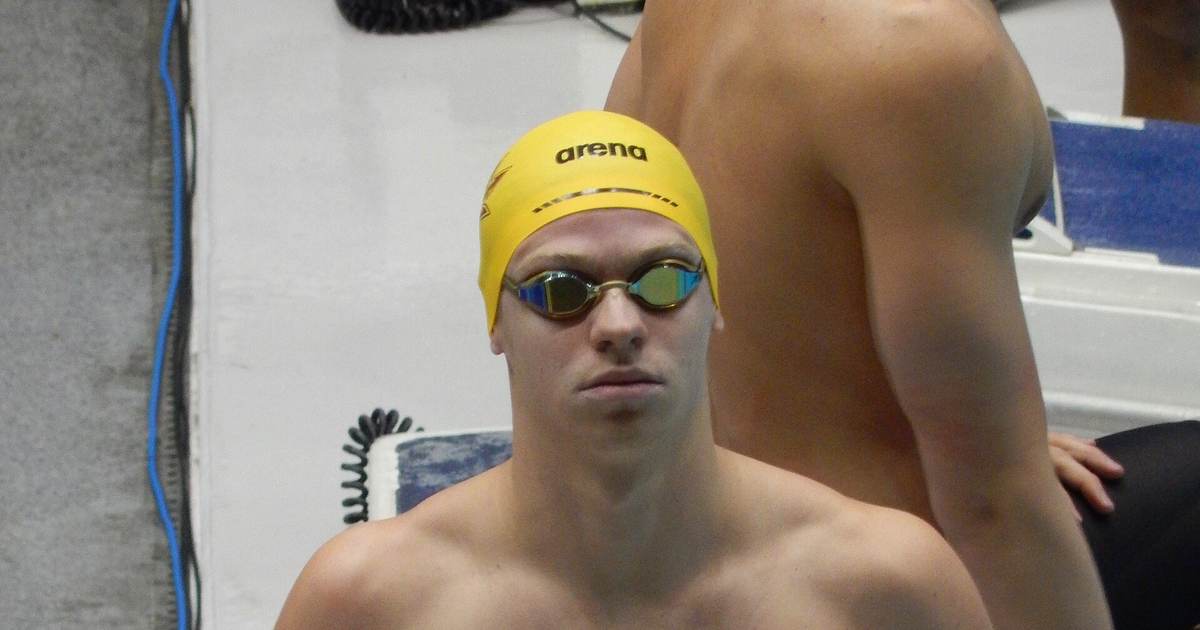
How Léon Marchand Trains (Phelps's Coach, and a Stopwatch Instead of a Heart Monitor)
Marchand trains under Bob Bowman, the coach who made Michael Phelps, on pace and short rest rather than heart rate. Why swimmers set zones from a stopwatch.

Léon Marchand trains against a clock. Heart rate is nearly useless in the water, so the world's best medley swimmer, coached by the man who built Michael Phelps, trains on pace per hundred metres and how much rest he gets between reps. That is how an amateur should set swim zones too.
The Bowman lineage
Marchand is coached by Bob Bowman, who guided Michael Phelps to 23 Olympic golds. He moved from France to Arizona State to train under Bowman, followed him to the University of Texas, and as of 2026 trains in Bowman's pro group in Austin. Bowman calls both Phelps and Marchand "aerobic animals": a large aerobic foundation with precisely dosed speed and lactate work on top.
Marchand holds world records in the 200m and 400m individual medley, plus Olympic golds in the 200m butterfly and 200m breaststroke from his home Paris Games.
Intensity, not duration
No session runs longer than two hours, nothing in it is easy, and the rest is minimal. In Marchand's words, "for every two hours of training, we have one minute to recover." Volume is roughly 35 hours a week, about 20 in the pool, two sessions a day, six days a week.
Bowman's "red pace" threshold sets keep rest short (hundreds on around ten seconds, two-hundreds on twenty) so the swimmer holds race pace under fatigue. A 200 with a minute of rest, Bowman says, is not red pace.
Why swimmers ignore heart rate
Being horizontal and immersed blunts the heart-rate response, and reading a monitor mid-stroke is impractical. Swimmers use pace per hundred instead. The amateur version of a swimmer's threshold is Critical Swim Speed, from two time trials:
Critical Swim Speed
1:35/100m
CSS speed
1.05m/s
| Zone | Range | What it trains |
|---|---|---|
| Z1 | Recovery 1:43–1:47 /100m | Easy technique and recovery swimming. RPE 2–3, smooth. |
| Z2 | Endurance 1:37–1:43 /100m | Aerobic base; long steady sets. RPE 4–5, comfortable. |
| Z3 | Threshold (CSS) 1:33–1:37 /100m | Critical swim speed, your sustainable threshold pace. RPE 6–7, comfortably hard. |
| Z4 | VO₂max 1:29–1:33 /100m | Maximal aerobic; race-pace intervals. RPE 8–9, hard. |
| Z5 | Sprint 1:21–1:29 /100m | Speed and anaerobic power; short fast reps. RPE 9–10, very fast. |
Z1 · Recovery. Easy technique and recovery swimming. RPE 2–3, smooth.
Z2 · Endurance. Aerobic base; long steady sets. RPE 4–5, comfortable.
Z3 · Threshold (CSS). Critical swim speed, your sustainable threshold pace. RPE 6–7, comfortably hard.
Z4 · VO₂max. Maximal aerobic; race-pace intervals. RPE 8–9, hard.
Z5 · Sprint. Speed and anaerobic power; short fast reps. RPE 9–10, very fast.
- Critical Swim Speed is your threshold pace, about 1:35 per 100 m here. It is the slope of the 200 m and 400 m efforts, so both must be genuinely maximal and well-paced.
- Swim CSS as a 400 m and a 200 m time trial on the same session, fully rested between. If the 200 m is not much faster than 400-m pace, you likely didn't pace the 400 m hard enough.
- Heart rate is unreliable in the water, so CSS pace is the most practical anchor for swim training.
A PDF of your personalized results, with a QR code to reopen them anytime.
Swim a 400 and a 200 as hard as you can hold, feed in the times, and you get your CSS. Easy swims sit a few seconds per hundred slower, threshold sets around it, fast work above it. Hold a known pace on controlled rest, exactly as Bowman does with Marchand.
Most amateur swimmers grind every length at a vague moderate effort with long wall-hanging between reps. That builds neither base nor speed.
Strength, not size
Marchand's dryland work is built around stability and functional power (bands, sled work, core) rather than mass. Added bulk hurts buoyancy and efficiency.
2026
Marchand strained an adductor at the French Championships in late June 2026 and withdrew from the rest of the meet after winning the 400 IM. His target is the European Championships in Paris in August, his first senior Europeans, where he has talked about attacking his own 400 IM world record.
What you can steal from it
- Set swim zones from a stopwatch. Critical Swim Speed is the swimmer's threshold, from two honest time trials.
- Control the rest. A hard rep with long recovery is not threshold work.
- Hold a known pace. A number replaces "swim hard."
- Train breadth if you can. Varied strokes build a broader engine.
- Strength for stability, not size. Support the stroke without adding mass.
Marchand controls intensity against a precise external number, like every athlete in this series. His is a time on a pace clock, the one you can copy for free tomorrow.
More in this series: Katie Ledecky, Michael Phelps, whom Bob Bowman also coached, Kristian Blummenfelt, Alex Yee, Jakob Ingebrigtsen and elite rowers.
Sources
Cover photo by Tanis Coralee Leonhardi, CC BY-SA 4.0, via Wikimedia Commons.
