How Matthew Marquardt Trains (Kona Podium on 20 to 25 Hours a Week)
Matthew Marquardt finished third at Kona 2026 while still in medical school. His coach steers every session by lactate threshold, not by power or pace.

Matthew Marquardt finished third at the Ironman World Championship in Kona on 10 October 2026 in 7:49:59, 2:31 behind Vincent Luis, after serving a three-minute drafting penalty on the bike. He is a medical student at Ohio State who trains 20 to 25 hours a week, at the low end of the professional range. His coach makes those hours count by anchoring every session to lactate threshold rather than to power or pace.
The race
Marquardt swam with the leaders and reached the Hawi turnaround second on the road. He took the lead soon after, then was shown a blue card for drafting: three minutes in the penalty tent. He went in first and came out eighth. He rode back to third by T2, 2:23 down on Magnus Ditlev, then spent the marathon swapping places with Gregory Barnaby. He finally broke Barnaby at an aid station late in the run. It was the third podium for an American man at the World Championship in a decade.
A part-time pro
Marquardt swam for Princeton and had no plans to race after graduating. He borrowed a bike and a wetsuit for Ironman 70.3 Gulf Coast in 2021, the day before graduation, and was near the front of the overall race. Six weeks into medical school he was second in his age group at the 70.3 World Championship. In 2022 he won the amateur world title at Kona. He turned pro in 2023, in his second year of medical school, and finished third on his Ironman pro debut in Texas.
Coach Andrew Yoder of Yoder Performance has coached him since 2021. Per Yoder, Marquardt logs 20 to 25 hours a week, rising to 25 to 30 in Ironman builds, mostly long rides and runs. A typical week holds four swims of 4 to 5 km, five rides and six runs. In 2025 TrainingPeaks described a day that starts by 5 a.m., fits one session before 9 a.m. classes and another later, and ends in bed by 8 p.m. A detailed session-by-session week is not public.
Lactate is the fixed point
Yoder steers the training by LT1 and LT2, the first and second lactate thresholds, with heart rate, power and pace as support. His explanation is the useful part:
We have an understanding of where the lactate, the power, the heart rate, they all are very consistent over time. Like the power will shift obviously with progression, the pace will shift with the progression, but the lactate obviously is stable and we've seen heart rate over time be stable specifically to Matthew.
As he gets fitter, the watts and the pace at threshold rise. The metabolic state does not change, and for Marquardt neither does the heart rate that goes with it. Marquardt says the same: "We base my training a lot on lactate, we measure it during workouts to make sure I'm not over-doing it or under-doing it metabolically."
On 20-odd hours a week a session that drifts too hard costs the next day, and one that drifts too easy is wasted time. Hitting the intended intensity every time is how a part-time schedule competes with full-time pros. Kristian Blummenfelt uses a lactate meter for the same reason, at 30 or more hours.
Your version without a meter
Most amateurs do not prick a finger mid-interval. The practical substitute is heart rate at threshold. A 30-minute solo time trial gives you your lactate threshold heart rate (LTHR), which sits close to LT2, the upper of Yoder's two landmarks, without the lab.
Lactate-threshold HR
165bpm
cycling LTHR
| Zone | Range | What it trains |
|---|---|---|
| Z1 | Active Recovery ≤ 132 bpm | Recovery spins; flushes the legs. RPE 1–2, very easy. |
| Z2 | Endurance 133–147 bpm | Aerobic base and fat metabolism. RPE 3–4, all-day pace. |
| Z3 | Tempo 148–153 bpm | Aerobic endurance, 'sweet' steady work. RPE 5–6, comfortably hard. |
| Z4 | Threshold 154–163 bpm | Lactate threshold; sustainable hard. RPE 7–8, 20–60 min limit. |
| Z5a | VO₂max 164–168 bpm | Maximal aerobic power. RPE 9, 3–8 min efforts. |
| Z5b | Anaerobic Capacity 169–175 bpm | Anaerobic capacity, short and sharp. RPE 9–10, 30s–3min. |
| Z5c | Neuromuscular ≥ 176 bpm | Sprint power and neuromuscular drive. RPE 10, all-out. |
Z1 · Active Recovery. Recovery spins; flushes the legs. RPE 1–2, very easy.
Z2 · Endurance. Aerobic base and fat metabolism. RPE 3–4, all-day pace.
Z3 · Tempo. Aerobic endurance, 'sweet' steady work. RPE 5–6, comfortably hard.
Z4 · Threshold. Lactate threshold; sustainable hard. RPE 7–8, 20–60 min limit.
Z5a · VO₂max. Maximal aerobic power. RPE 9, 3–8 min efforts.
Z5b · Anaerobic Capacity. Anaerobic capacity, short and sharp. RPE 9–10, 30s–3min.
Z5c · Neuromuscular. Sprint power and neuromuscular drive. RPE 10, all-out.
- LTHR-based zones are more individual than %HRmax because they anchor to your actual threshold, not an age estimate. Cycling and running LTHR differ, so test each sport separately.
- Field test: warm up, then ride or run a hard 30-minute solo time trial. Your LTHR is the average heart rate of the final 20 minutes (Friel's protocol).
A PDF of your personalized results, with a QR code to reopen them anytime.
Enter your LTHR and the calculator gives you Friel's zones. Use them the way Marquardt's coach uses lactate: let power and pace rise as you get fitter, and keep the target heart rate where the zone puts it. Retest every six to eight weeks. How to find your lactate threshold covers the test.
Durability on a flat, indoor diet
Marquardt lives in flat Columbus and does most of his riding indoors in ERG mode. Yoder called his 2023 World Championship in Nice, where he rode 4:49:11 and still ran 2:43:44 to finish 11th, a "major wakeup call" about bike durability. The fix was long gravel rides held in a tight power window, threshold intervals at a low 50 rpm cadence, and inclined treadmill running. He does little strength work but daily mobility and core work for the lower back and hips, aimed at the race-day muscle spasms that cost him several races. Yoder also watches Variability Index, how steadily a ride is paced, and calls power control "a heavy metric" for age-groupers.
What you can steal from it
- Anchor zones to threshold, not to the watch. Power and pace move with fitness; heart rate at threshold moves far less.
- Retest instead of guessing. A 30-minute time trial every six to eight weeks keeps your LTHR zones honest.
- Make every hour land. On a limited schedule the intended intensity matters more than adding volume.
- Ride steady. A tight power window on long rides builds durability without drifting into the wrong zone.
- Train the mechanics, not just the engine. Low-cadence intervals and incline running made his legs last eight hours.
More in this series: Vincent Luis, Gustav Iden, women's champion Taylor Knibb, Kristian Blummenfelt, Alex Yee, Lucy Charles-Barclay and Mark Allen.
Sources
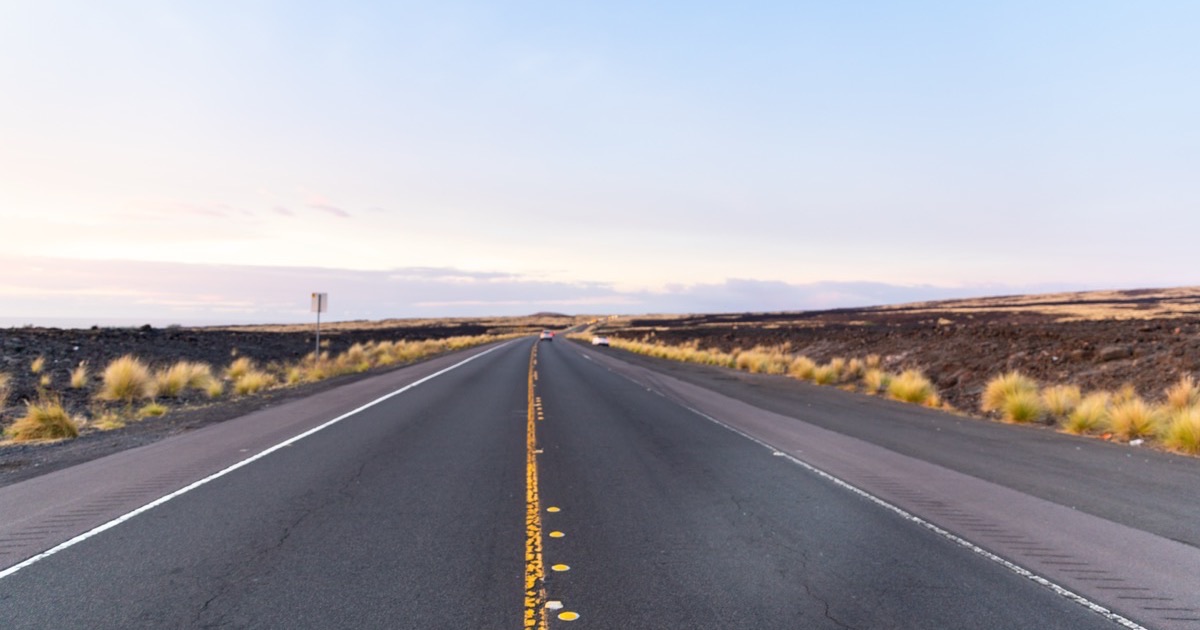
Cover photo: the Kona bike course through the lava fields (no freely licensed photograph of Marquardt is available on Wikimedia Commons). Photo by dronepicr, CC BY 2.0, via Wikimedia Commons.
.jpg)