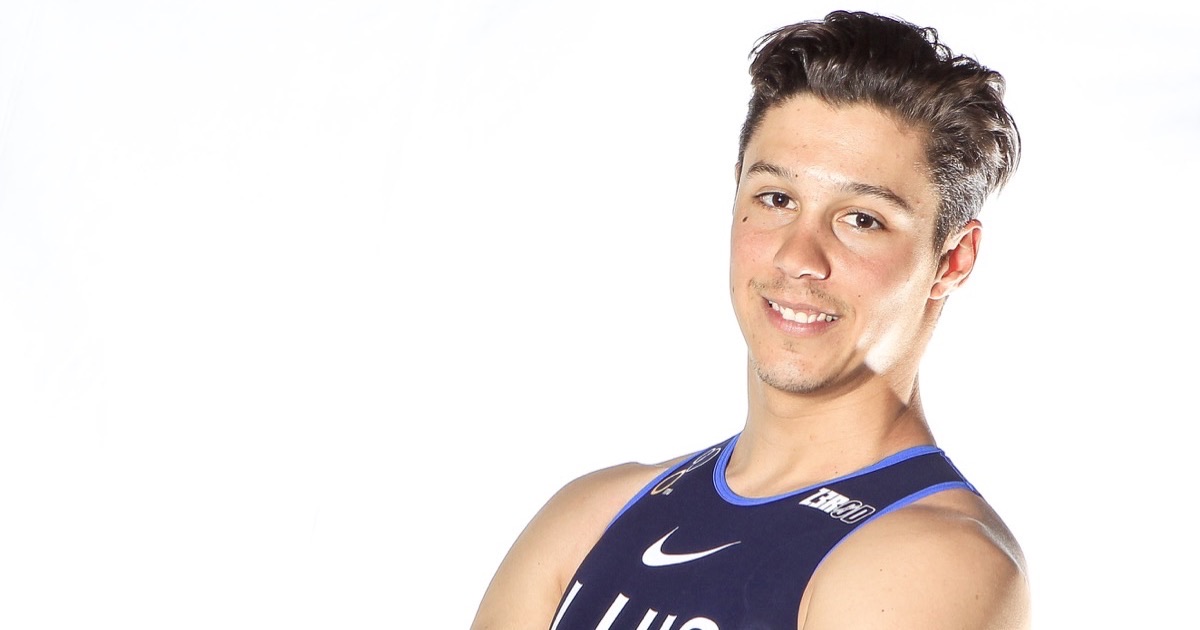
How Vincent Luis Trains (and Why He Won Kona by Letting the Race Go)
Vincent Luis won Kona 2026 on debut, six minutes down off the bike. How a short-course champion learned Ironman pacing, and how to set your own bike watts.
Vincent Luis won the 2026 Ironman World Championship in Kona on 10 October in 7:47:27, on his debut, after starting the marathon about six minutes behind the leader. He swam 48:31, rode 4:15:42 and ran 2:38:36. Matthew Marquardt rode four minutes faster and finished third. Luis won because he arrived at the run with something left.
A sprinter learning to wait
Luis built his career on short, violent racing. He was ITU world champion in 2019 and 2020 and won Olympic bronze in the mixed relay in Tokyo. Short-course triathlon is drafting, surging and a 10 km run. An Ironman is eight hours of resisting the urge to do any of that.
His long-course record shows him learning. At Challenge Roth in 2025, his first full distance, he finished fourth in 7:38:54 after a month without running and ran 2:43:18 on what an MRI later showed were two tears in his calf and soleus. He was fourth again at Ironman Texas in April 2026. Afterwards he said the Roth build had cost him bike power and that he and his team changed his position.
Before Kona he told TRI247 he was not afraid of letting the race go, would try to catch people on the run, and was in the best running shape of his life.
What the training looked like
His full training week, his coach's prescriptions and his power numbers are not public. He hides his performance data on Strava.
One session is documented. Thirteen days before Texas, the German magazine tri-mag reported his last big brick: 174 km in 4:28 with almost 1,400 m of climbing, built around three one-hour blocks at race intensity, followed by a 27 km tempo run. That is the classic long-course key session. Rehearse race power for hours, then prove you can still run on it.
After Kona he described the cost of the final build: "The last 12 weeks were really, really hard," with "many, many nights when you're going to bed hungry." He called it "a really hard commitment" and said, "I don't think I can do it again."
The race was decided on the run
Magnus Ditlev led for most of the day and came off the bike first. Luis was 6:04 down. Ditlev cramped at an aid station early in the marathon, slowed, and later walked. Luis ran past Kristian Blummenfelt, then caught Ditlev at an aid station with under five miles to go. Gustav Iden ran the fastest marathon, 2:36:58, and still finished 1:35 behind.
The comparison with Marquardt is the cleanest lesson. Marquardt rode 4:11:28 and ran 2:43:58. Luis rode 4:15:42 and ran 2:38:36. Luis gave up 4:14 on the bike and took back 5:22 on the run.
Ironman intensity is lower than most people think
Ironman race intensity sits far below threshold. Joe Friel's guideline for a well-prepared age grouper on a six-hour bike split is 67 to 69% of FTP, a training stress score of 269 to 286. With an FTP of 250 watts that is 168 to 173 watts, inside what the Coggan model calls Zone 2, endurance (56 to 75% of FTP).
Holding that number for hours, on aero bars, while eating, is the skill Luis's one-hour race-intensity blocks rehearse. Find your Zone 2 watts here, then rehearse the bottom half of that zone in your long rides:
FTP
250W
Sweet Spot
220–235W
88–94% FTP
| Zone | Range | What it trains |
|---|---|---|
| Z1 | Active Recovery ≤ 138 W | Recovery; spins the legs without adding load. RPE 1–2, very easy. |
| Z2 | Endurance 139–188 W | Aerobic base, fat oxidation, all-day pace. RPE 3–4, conversational. |
| Z3 | Tempo 189–225 W | Aerobic endurance and muscular efficiency. RPE 5–6, comfortably hard. |
| Z4 | Threshold 226–263 W | Lactate threshold, FTP work, the sustainable ceiling. RPE 7–8, 10–30 min reps. |
| Z5 | VO₂max 264–300 W | Maximal aerobic power; 3–8 min intervals. RPE 9, very hard. |
| Z6 | Anaerobic Capacity 301–375 W | Anaerobic capacity; 30s–3min efforts. RPE 9–10, near maximal. |
| Z7 | Neuromuscular Power ≥ 376 W | Sprint and neuromuscular power. RPE 10, all-out sprints. |
Z1 · Active Recovery. Recovery; spins the legs without adding load. RPE 1–2, very easy.
Z2 · Endurance. Aerobic base, fat oxidation, all-day pace. RPE 3–4, conversational.
Z3 · Tempo. Aerobic endurance and muscular efficiency. RPE 5–6, comfortably hard.
Z4 · Threshold. Lactate threshold, FTP work, the sustainable ceiling. RPE 7–8, 10–30 min reps.
Z5 · VO₂max. Maximal aerobic power; 3–8 min intervals. RPE 9, very hard.
Z6 · Anaerobic Capacity. Anaerobic capacity; 30s–3min efforts. RPE 9–10, near maximal.
Z7 · Neuromuscular Power. Sprint and neuromuscular power. RPE 10, all-out sprints.
- Andrew Coggan's seven-zone model expresses every zone as a percentage of Functional Threshold Power. Sweet Spot (220–235 W, 88–94% FTP) sits between Tempo and Threshold and gives a high training stimulus for moderate fatigue.
- FTP is the power you could theoretically hold for about an hour. Re-test every 4–6 weeks; a stale FTP makes every zone wrong.
A PDF of your personalized results, with a QR code to reopen them anytime.
To check a planned bike split against Friel's TSS range, the training load calculator turns duration and intensity into TSS. For pacing the run off a controlled bike, see how Alex Yee races off the bike.
What you can steal from it
- Ride the Ironman at about two-thirds of FTP. Friel's range for a six-hour split is 67 to 69%, inside Zone 2.
- Rehearse race watts in long blocks. Three one-hour efforts at race power inside a long ride, then a run off the bike.
- Treat the bike as setup for the run. Luis lost 4:14 to Marquardt on the bike and won back 5:22 on foot.
- Let the leaders go. Six minutes off the bike was not too much against a field that overcooked it.
- Fix the bike fit when the bike fades. Luis changed his position after Roth cost him power.
More in this series: Gustav Iden, Matthew Marquardt, Taylor Knibb, Laura Philipp, Julie Derron, Kristian Blummenfelt, Lucy Charles-Barclay and Mark Allen.
Sources
- Slowtwitch race report
- Slowtwitch top five
- Big Island Now
- NBC Sports results
- Triathlete interview
- TRI247 live coverage
- tri-mag Texas brick
- World Triathlon interview
- Challenge Roth 2025 results
- Joe Friel on Ironman power
- Wikipedia profile
Cover photo by Christophe Guiard, CC BY-SA 4.0, via Wikimedia Commons.
.jpg)