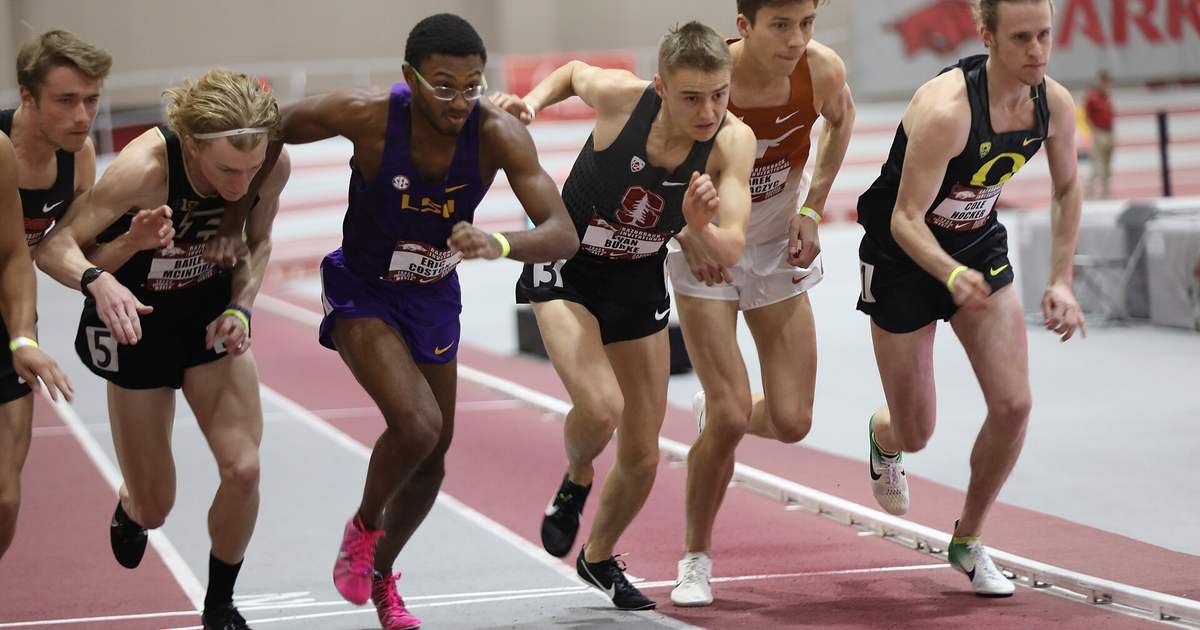
How Cole Hocker Trains (One Engine, From the Mile to the 5000)
Cole Hocker is Olympic 1500m champion, world 5000m champion and the second-fastest indoor miler ever. How one number predicts your pace at every distance.

Cole Hocker's defining quality is range. Olympic 1500m gold in 2024 in an Olympic-record 3:27.65. The world 5000m title in Tokyo a year later. An indoor mile of 3:45.94 in early 2026, an American record and the second-fastest in history behind Jakob Ingebrigtsen. That range is a live demonstration that these distances run on one engine.
The span, in numbers
1500m: 3:27.65. 5000m: 12:58.30 at the 2025 World Championships, which he won. Mile: 3:47.43 outdoors, 3:45.94 indoors, a fraction behind Ingebrigtsen's world record. A runner who can win a kick-decided 1500 and grind out a 5000 title against specialists.
The outdoor mile world record moved in 2026 to Josh Kerr's 3:42.66. In that company, what sets Hocker apart is how far up in distance his speed carries.
Range is one engine, expressed at different speeds
The same aerobic engine underpins the mile and the 5000. A miler's finishing speed sits on top of it. A 5000m runner's durability draws from it. That is why a fast mile predicts a competitive 5000, and vice versa.
VDOT formalises this. Jack Daniels' system takes one race result, derives a single fitness number, and projects equivalent times and training paces from 1500m to the marathon:
VDOT
49.8
Daniels 러닝 피트니스 점수
| 존 | 범위 | 무엇을 단련하는가 |
|---|---|---|
| E | 쉬움 / 롱런 4:54–5:53 /km | 유산소 기초, 모세혈관, 지방 대사; 주간 볼륨의 대부분. RPE 3–4, 대화 가능. |
| M | 마라톤 4:26–4:51 /km | 마라톤 특화 지구력과 경제성. RPE 5–6, 꾸준함. |
| T | 역치 4:16–4:28 /km | 젖산 역치; 편안하게 힘든 템포와 크루즈 인터벌. RPE 7, 약 1시간 레이스 강도. |
| I | 인터벌 3:51–4:01 /km | VO₂max; 3–5분 강한 반복. RPE 9, 힘듦. |
| R | 리피티션 3:19–3:42 /km | 스피드, 경제성, 러닝 파워; 충분한 회복과 함께하는 짧고 빠른 반복. RPE 9–10, 빠르고 통제됨. |
E · 쉬움 / 롱런. 유산소 기초, 모세혈관, 지방 대사; 주간 볼륨의 대부분. RPE 3–4, 대화 가능.
M · 마라톤. 마라톤 특화 지구력과 경제성. RPE 5–6, 꾸준함.
T · 역치. 젖산 역치; 편안하게 힘든 템포와 크루즈 인터벌. RPE 7, 약 1시간 레이스 강도.
I · 인터벌. VO₂max; 3–5분 강한 반복. RPE 9, 힘듦.
R · 리피티션. 스피드, 경제성, 러닝 파워; 충분한 회복과 함께하는 짧고 빠른 반복. RPE 9–10, 빠르고 통제됨.
- 당신의 VDOT 49.8은 현재 러닝 체력을 담아낸 단일 수치입니다(러닝 경제성을 반영해 조정한 'VO₂max'). 모든 훈련 페이스가 여기서 도출됩니다.
- VDOT는 최근의 강도 높은 레이스나 타임 트라이얼 하나에서 나옵니다. 전력을 다해 레이스한 결과를 사용하세요. 이상적으로는 5 km 이상이며, 하프 마라톤이나 10 km가 가장 안정적인 추정치를 줍니다.
- 단위 토글을 전환하면 마일당 페이스로 볼 수 있습니다. 체력이 향상되면 다시 레이스하세요. VDOT와 모든 페이스가 갱신됩니다.
- 이것은 다니얼스의 개별 훈련 페이스(E, M, T, I, R)이며 연속된 존이 아닙니다. 각 페이스를 특정 목적에 맞춰 달립니다. 더 힘든 페이스(T, I, R) 사이의 간격은 오류가 아니라 의도된 것입니다.
당신의 개인 맞춤 결과가 담긴 PDF와, 언제든 다시 열 수 있는 QR 코드.
Enter a recent race at any distance and it tells you what your engine is worth everywhere else, plus your training paces. Hocker is the top of that table. Yours stops you guessing 5k pace from 10k feel and keeps your easy runs easy.
What we know about his training
Hocker is 25, coached by Ben Thomas, and trains in Oregon. The fine detail of his week is not well documented, so no invented session breakdown here. The outline is the one every good middle-distance programme shares: a large base of easy mileage, a small dose of very fast race-specific work, and patience. His finishing kick is built on being aerobically strong enough to have something left when everyone else is empty.
Ingebrigtsen's route is the systematised Norwegian method. Hocker's is the American collegiate-to-pro track tradition. Both end in a big aerobic engine and a sharp finish.
What you can steal from it
- Treat your distances as one engine. Mile speed and 5k fitness are the same base expressed differently. Train the base, sharpen the ends.
- Use one result to set everything. A recent race plus VDOT gives you equivalent times and your correct training paces.
- Build the kick on aerobic strength. A finish like Hocker's is being fresh enough to use your leg speed. Most of that work is easy running.
- Keep easy days easy so fast days can be fast.
More in this series: Josh Kerr, Jakob Ingebrigtsen, Eliud Kipchoge, Courtney Dauwalter and Alex Yee.
Sources
Cover photo by jenaragon94, CC BY 2.0, via Wikimedia Commons.
