LT1, LT2, and LTHR: The Lactate Thresholds Explained
What LT1, LT2 and LTHR mean, where they sit on the lactate curve, and how aerobic threshold, anaerobic threshold, OBLA, MLSS and VT1/VT2 map onto them.

LT1, LT2 and LTHR describe where your body crosses from easy to hard. LT1 is the lower lactate threshold (the aerobic threshold), where blood lactate first rises above resting baseline. LT2 is the upper lactate threshold (the anaerobic threshold), where lactate climbs steeply and you can no longer hold a steady state. LTHR is not a third threshold. It is your heart rate at LT2, the number most heart-rate zone systems are built on.
The lactate curve
Your muscles produce lactate all the time, even at rest. It is a fuel, not waste: the body shuttles it from working muscle to the heart, liver and other fibres and burns it. That is George Brooks's "lactate shuttle." Blood lactate is the balance between production and clearance.
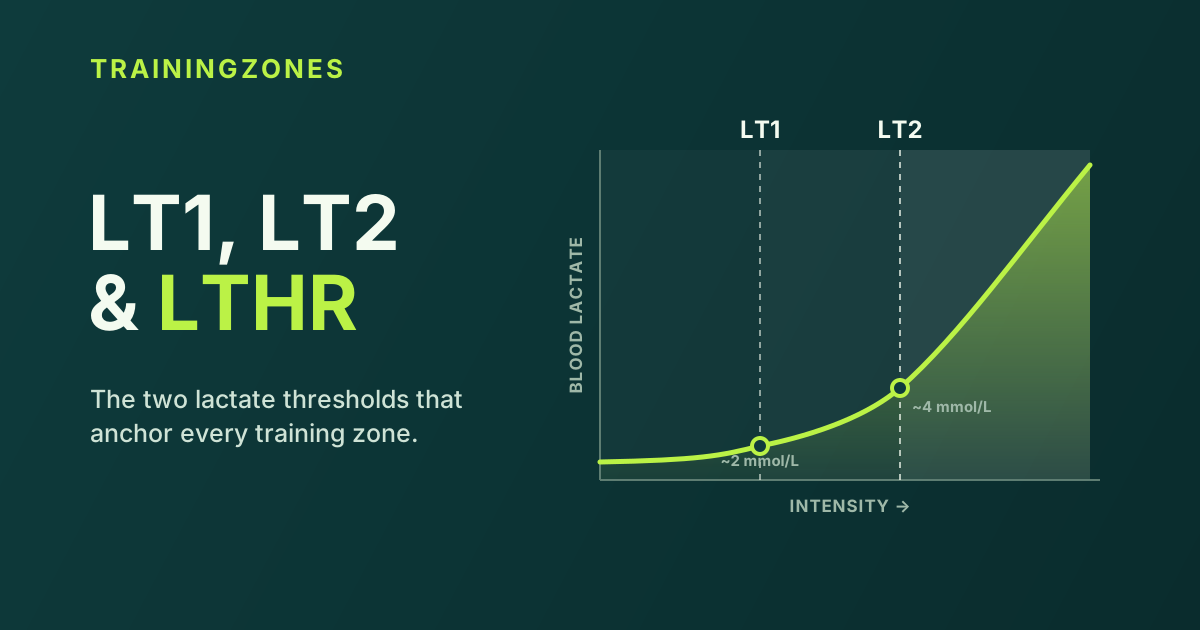
Plot blood lactate against intensity and you get two bends:
At low intensity lactate stays flat. At the first bend, LT1, production edges ahead and lactate lifts above baseline. Between the bends it rises gradually but stays controllable. At the second bend, LT2, clearance is maxed out and lactate accelerates until you back off.
What is LT1 (the aerobic threshold)?
LT1 is the intensity where blood lactate first rises clearly above resting level, often pegged near 2 mmol/L, though the strict definition is "the first sustained rise above baseline." Below LT1 you burn a high proportion of fat, breathe easily and could continue for hours. It is the ceiling of Zone 2 and the threshold that matters for base building: staying under it lets you accumulate large volumes of Zone 2 training without a recovery hole. LT1 lines up with the first ventilatory threshold (VT1), where the talk test first gets slightly harder.
What is LT2 (the anaerobic threshold)?
LT2 is the hardest intensity you can sustain in a metabolic steady state, roughly a one-hour effort. Above it lactate rises continuously. This is the threshold field tests and FTP estimates chase, and it lines up with the second ventilatory threshold (VT2), where breathing becomes labored.
LT2 is usually written as "4 mmol/L." That figure comes from Mader's OBLA (onset of blood lactate accumulation) work and is a population average. The intensity you can hold in a steady state is the maximal lactate steady state (MLSS), and measured MLSS lactate ranges from about 2 to 8 mmol/L across individuals. A fixed 4 mmol/L cutoff overestimates the threshold for some athletes and underestimates it for others.
What is LTHR, and how is it different?
LTHR (lactate-threshold heart rate) is the heart rate at LT2. It is LT2 in beats per minute instead of pace, power or millimoles. Heart rate is the threshold marker almost everyone can measure for free, so LTHR anchors the most widely used heart-rate zone systems, including Joe Friel's.
The standard estimate is Friel's 30-minute solo time trial. Your LTHR is the average heart rate of the final 20 minutes. Press lap at 10 minutes and ignore the opening 10, because heart rate lags effort early and drags the average down. (Averaging the readings at 10, 20 and 30 minutes is a looser approximation, not Friel's published method.) The full protocol, with pace and power alternatives, is in how to find your lactate threshold.
LT, AT, OBLA, MLSS, VT: a quick disambiguation
Different labs named the same two landmarks differently:
- LT1 = aerobic threshold (AeT) = VT1 = the "first lactate turn point." The lower landmark, top of easy. Around 2 mmol/L.
- LT2 = anaerobic threshold (AnT) = lactate threshold (LT) = VT2 ≈ OBLA ≈ MLSS ≈ FTP (on the bike). The upper landmark, your ~1-hour ceiling. Around 4 mmol/L.
- LTHR = the heart rate at LT2. A number, not a threshold.
- OBLA is the fixed 4 mmol/L definition of LT2. MLSS is the individually measured version. VT1/VT2 are the same landmarks seen through breathing instead of blood.
"My threshold" almost always means LT2. "Keep easy days easy" means stay under LT1.
How the two thresholds define your training
LT1 and LT2 split intensity into the three zones associated with Stephen Seiler:
- Below LT1: easy aerobic work. The bulk of the week.
- Between LT1 and LT2: the "gray zone." Useful in measured doses (tempo, sweet spot), overused by most amateurs.
- At or above LT2: hard work that drives the high-end adaptations.
This is the backbone of polarized training. Turn your LTHR into heart-rate bands here:
젖산 역치 심박수
165bpm
사이클링 LTHR
| 존 | 범위 | 무엇을 단련하는가 |
|---|---|---|
| Z1 | 능동적 회복 ≤ 132 bpm | 회복용 스핀; 다리를 풀어줍니다. RPE 1–2, 매우 쉬움. |
| Z2 | 지구력 133–147 bpm | 유산소 기초와 지방 대사. RPE 3–4, 하루 종일 갈 수 있는 페이스. |
| Z3 | 템포 148–153 bpm | 유산소 지구력, '스위트'한 꾸준한 운동. RPE 5–6, 편안하게 힘듦. |
| Z4 | 역치 154–163 bpm | 젖산 역치; 지속 가능한 강도. RPE 7–8, 20–60분 한계. |
| Z5a | VO₂max 164–168 bpm | 최대 유산소 파워. RPE 9, 3–8분 노력. |
| Z5b | 무산소 능력 169–175 bpm | 무산소 능력, 짧고 날카로운 노력. RPE 9–10, 30초–3분. |
| Z5c | 신경근 ≥ 176 bpm | 스프린트 파워와 신경근 구동력. RPE 10, 전력 질주. |
Z1 · 능동적 회복. 회복용 스핀; 다리를 풀어줍니다. RPE 1–2, 매우 쉬움.
Z2 · 지구력. 유산소 기초와 지방 대사. RPE 3–4, 하루 종일 갈 수 있는 페이스.
Z3 · 템포. 유산소 지구력, '스위트'한 꾸준한 운동. RPE 5–6, 편안하게 힘듦.
Z4 · 역치. 젖산 역치; 지속 가능한 강도. RPE 7–8, 20–60분 한계.
Z5a · VO₂max. 최대 유산소 파워. RPE 9, 3–8분 노력.
Z5b · 무산소 능력. 무산소 능력, 짧고 날카로운 노력. RPE 9–10, 30초–3분.
Z5c · 신경근. 스프린트 파워와 신경근 구동력. RPE 10, 전력 질주.
- LTHR 기반 존은 나이 추정치가 아닌 실제 역치에 기준을 두므로 %HRmax보다 더 개인화되어 있습니다. 사이클링과 러닝의 LTHR은 다르므로 종목별로 따로 테스트하세요.
- 필드 테스트: 워밍업 후 강도 높은 30분 단독 타임 트라이얼을 라이딩하거나 달립니다. LTHR은 마지막 20분의 평균 심박수입니다(Friel 프로토콜).
당신의 개인 맞춤 결과가 담긴 PDF와, 언제든 다시 열 수 있는 QR 코드.
Caveats
The millimole numbers are averages. Your LT1 and LT2 sit where your curve bends, which only a graded lab test measures directly. Field estimates like the 30-minute test get most athletes close enough, but they assume even pacing and a maximal effort. Thresholds move with training, so retest every 4 to 8 weeks.
Sources
- Stephen Seiler, intensity-distribution research (LT1/LT2 framework, three-zone model)
- George Brooks, the lactate-shuttle concept
- Mader and colleagues, the fixed 4 mmol/L OBLA definition
- Maximal-lactate-steady-state (MLSS) research showing individual threshold lactate of roughly 2–8 mmol/L
- Joe Friel, the 30-minute time-trial protocol for LTHR and the zones derived from it