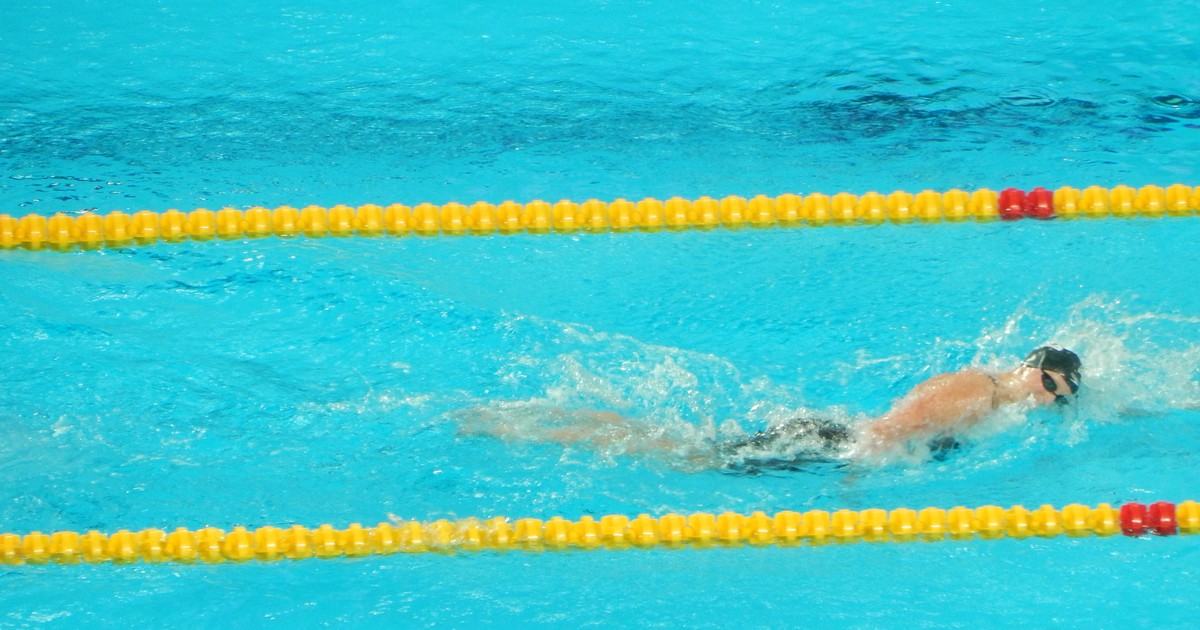
How Katie Ledecky Trains (the Most Aerobic Athlete in the Pool)
Katie Ledecky races a pace, not an opponent, on huge aerobic volume held to precise splits. How she trains, and why swimmers set zones by stopwatch.

Katie Ledecky holds the world records in the 800m and 1500m freestyle, has nine Olympic gold medals, and in 2025 became the first swimmer of any gender to win seven world titles in a single event. Her sport is holding a precise pace for longer than anyone else can, and she trains it the way an amateur should: against the clock, not a heart-rate strap.
The most aerobic athlete in the pool
Distance freestyle is one of the most aerobic events in sport. Under coach Anthony Nesty at the University of Florida, where she moved in 2021, Ledecky reportedly covers around 45 miles a week in the pool on top of dryland and weight-room work, training in the distance group alongside the university's men.
Her coaching lineage runs from Yuri Suguiyama to Bruce Gemmell to Greg Meehan and now Nesty. The throughline is high, precise volume. On her 2024 to 2025 block: "By Christmas training, I was doing things I've never done before from a yardage perspective, from intensity, from times I'm hitting in practice while doing that kind of yardage."
She races a pace, not an opponent
Ledecky leads from the front and wins by open water, so she is rarely racing the swimmer next to her. She races a target split she knows she can hold while everyone else fades. That is built with descending and hold-pace sets: not "swim hard" but "hold this exact time per hundred, then this slightly faster one." One documented set from her development was eleven 400s descending from around 4:07 to 3:49, each swum to a target.
It is the same discipline as Kipchoge's controlled easy running and Ingebrigtsen's lactate-capped thresholds: pick a number you can repeat and hold it.
Why swimmers use a stopwatch, not a heart strap
Heart rate barely works in the water. Being horizontal and immersed blunts the response, and reading a monitor mid-stroke is impractical. Swimmers use pace per hundred instead. Where Léon Marchand's medley training leans on short rest and race-pace intensity, Ledecky's leans on holding a pace over long sets. Both are organised around the same external number.
The amateur version is Critical Swim Speed, estimated from two time trials:
Critical Swim Speed
1:35/100m
CSS-snelheid
1.05m/s
| Zone | Bereik | Wat het traint |
|---|---|---|
| Z1 | Herstel 1:43–1:47 /100m | Rustig technisch en herstelzwemmen. RPE 2–3, soepel. |
| Z2 | Duurvermogen 1:37–1:43 /100m | Aerobe basis; lange constante series. RPE 4–5, comfortabel. |
| Z3 | Drempel (CSS) 1:33–1:37 /100m | Critical swim speed, je houdbare drempeltempo. RPE 6–7, comfortabel zwaar. |
| Z4 | VO₂max 1:29–1:33 /100m | Maximaal aeroob; intervallen op wedstrijdtempo. RPE 8–9, zwaar. |
| Z5 | Sprint 1:21–1:29 /100m | Snelheid en anaeroob vermogen; korte snelle herhalingen. RPE 9–10, heel snel. |
Z1 · Herstel. Rustig technisch en herstelzwemmen. RPE 2–3, soepel.
Z2 · Duurvermogen. Aerobe basis; lange constante series. RPE 4–5, comfortabel.
Z3 · Drempel (CSS). Critical swim speed, je houdbare drempeltempo. RPE 6–7, comfortabel zwaar.
Z4 · VO₂max. Maximaal aeroob; intervallen op wedstrijdtempo. RPE 8–9, zwaar.
Z5 · Sprint. Snelheid en anaeroob vermogen; korte snelle herhalingen. RPE 9–10, heel snel.
- Critical Swim Speed is je drempeltempo, hier ongeveer 1:35 per 100 m. Het is de helling tussen de inspanningen van 200 m en 400 m, dus beide moeten echt maximaal en goed verdeeld zijn.
- Zwem CSS als een tijdrit van 400 m en een van 200 m in dezelfde sessie, volledig uitgerust tussendoor. Als de 200 m niet veel sneller is dan het 400 m-tempo, heb je de 400 m waarschijnlijk niet hard genoeg ingedeeld.
- Hartslag is onbetrouwbaar in het water, dus het CSS-tempo is het meest praktische ankerpunt voor zwemtraining.
Een PDF met je resultaten, plus een QR-code om ze altijd opnieuw te openen.
Swim a 400 and a 200 as hard as you can hold, enter the times, and you get your CSS: the pace that approximates your swimming threshold. Easy swims sit a few seconds per hundred slower, threshold sets at it, fast work above it. Most amateur swimmers grind every length at a vague effort with lots of wall-hanging, which builds neither base nor speed. Anchoring to CSS fixes both.
2024 to 2026
Ledecky won the 800m and 1500m freestyle at the 2024 Paris Olympics, then at the 2025 World Championships in Singapore became the first swimmer to win seven world titles in the same individual event, the 800m freestyle. As of 2026 she is still based at Florida under Nesty and still extending records she set as a teenager.
What you can steal from it
- Build the aerobic base. Distance swimming is built with patient volume at controlled efforts.
- Set your swim zones from a stopwatch. Heart rate does not work in water. Critical Swim Speed is the swimmer's threshold.
- Hold a pace, don't "swim hard." Give every set a number and hold it.
- Descend on purpose. Sets that step down through known paces teach control.
- Play the long game. Her dominance rests on more than a decade of aerobic work.
More in this series: Léon Marchand, Kristian Blummenfelt, Eliud Kipchoge and the fast age-grouper on eight hours a week.
Sources
Cover photo by Voltmetro, CC BY-SA 4.0, via Wikimedia Commons.
