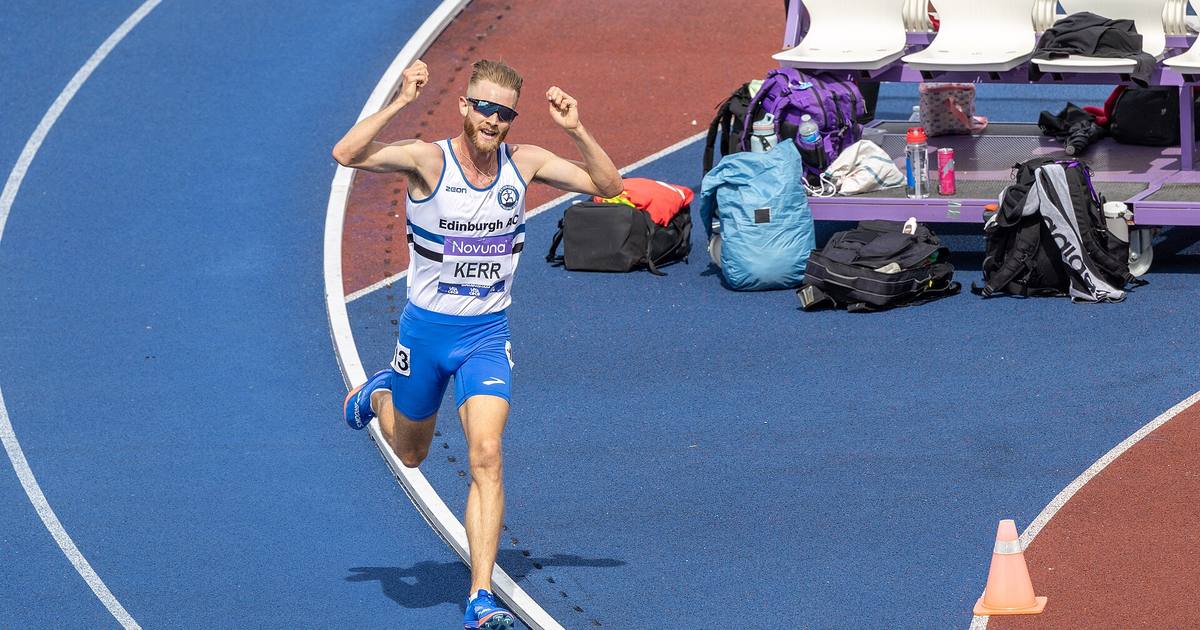
How Josh Kerr Trains (and How He Finally Broke the Mile World Record)
Josh Kerr ran 3:42.66 on 18 July 2026 and ended a 27-year-old mile world record. The training and pacing behind Project 222.

Hicham El Guerrouj ran 3:43.13 in 1999 and the mile world record sat there for 27 years. On 18 July 2026, at the London Diamond League, Josh Kerr ran 3:42.66. He had called the target Project 222 for a year, after the number of seconds a 3:42 mile takes. The same night he broke the British 1500m record with a 3:27.62 split.
Project 222, and why the mile is a pacing problem
A 3:42.66 mile is four laps at about 55.7 seconds each, with no lap you can afford to lose. The event is long enough that the aerobic engine decides it and short enough that one panicked lap ends the attempt. Project 222 was a pacing project as much as a fitness one: an even, ruthless rhythm instead of racing the early laps on adrenaline.
That scales down. Whether you chase a five-minute mile or a sub-20 5k, the usual mistake is going out too hard and dying. Records and PBs are evenly paced.
One engine, seen across the table
Kerr is not a pure miler. His range runs from a 1:44 800m through a 3:42 mile to a 13:23 5000m, plus world and Olympic 1500m medals and two world indoor 3000m titles. The mile, the 1500 and the 5000 are one aerobic engine expressed at different speeds.
VDOT shows exactly that. Feed in one race result and it derives a single fitness number, then projects your equivalent times and training paces across every distance:
VDOT
49.8
índice de condicionamento de corrida de Daniels
| Zona | Faixa | O que treina |
|---|---|---|
| E | Fácil / Longo 4:54–5:53 /km | Base aeróbica, capilares, metabolismo de gordura; a maior parte do volume semanal. RPE 3–4, conversável. |
| M | Maratona 4:26–4:51 /km | Resistência e economia específicas de maratona. RPE 5–6, estável. |
| T | Limiar 4:16–4:28 /km | Limiar de lactato; tempo confortavelmente difícil e intervalos de cruzeiro. RPE 7, esforço de prova de ~1h. |
| I | Intervalo 3:51–4:01 /km | VO₂max; repetições intensas de 3–5 min. RPE 9, difícil. |
| R | Repetição 3:19–3:42 /km | Velocidade, economia e potência de corrida; repetições curtas e rápidas com recuperação completa. RPE 9–10, rápido e controlado. |
E · Fácil / Longo. Base aeróbica, capilares, metabolismo de gordura; a maior parte do volume semanal. RPE 3–4, conversável.
M · Maratona. Resistência e economia específicas de maratona. RPE 5–6, estável.
T · Limiar. Limiar de lactato; tempo confortavelmente difícil e intervalos de cruzeiro. RPE 7, esforço de prova de ~1h.
I · Intervalo. VO₂max; repetições intensas de 3–5 min. RPE 9, difícil.
R · Repetição. Velocidade, economia e potência de corrida; repetições curtas e rápidas com recuperação completa. RPE 9–10, rápido e controlado.
- Seu VDOT de 49.8 é um único número que captura o condicionamento de corrida atual (um 'VO₂max' ajustado pela economia de corrida). Todo ritmo de treino é derivado dele.
- O VDOT vem de uma prova ou contrarrelógio recente e intenso. Use um resultado que você correu no máximo, idealmente 5 km ou mais; uma meia maratona ou 10 km dão a estimativa mais estável.
- Alterne as unidades para ler ritmos por milha. À medida que melhora, corra novamente; seu VDOT e todos os ritmos serão atualizados.
- Estes são os ritmos de treino distintos de Daniels (E, M, T, I, R), não zonas contínuas: você corre em cada ritmo com um objetivo específico. Os intervalos entre os ritmos mais difíceis (T, I e R) são intencionais, não um erro.
Um PDF com seus resultados personalizados, além de um QR code para reabri-los a qualquer momento.
Kerr is the top of that table. At your level the idea is identical: one result sets training paces at every distance.
His indoor mile sits just ahead of Cole Hocker's American record, and his career-long duel is with Jakob Ingebrigtsen, whom he beat at the 2023 World Championships and in the "Mile of the Century" at Eugene. Three training systems, one shared requirement: a huge aerobic base under a sharp finish.
The training behind it
Kerr is coached by Danny Mackey with the Brooks Beasts Track Club, splitting time between Seattle and altitude in Albuquerque. The shape is standard for middle distance that works: a large base of easy mileage, a smaller amount of very fast race-specific work, and altitude blocks to lift the aerobic ceiling. The record came from years of that base plus an evenly paced attempt on a fast night with pacemakers doing their job.
He was not a teenage phenomenon. He built through a World title in 2023, Olympic silver in 2024, world indoor golds and a calf injury at the 2025 World Championships, and broke the record at 28.
What you can steal from it
- Pace even. A mile or a 5k is won by holding a sustainable pace to the line, not by banking time early.
- Treat your distances as one engine. Use VDOT to turn one result into training paces across the board.
- Build the base, sharpen the end. A finish like Kerr's sits on a big aerobic engine, most of it built by easy mileage.
- Play the long game. He broke a 27-year record at 28, after years of championship racing.
More in this series: Cole Hocker, Jakob Ingebrigtsen, Eliud Kipchoge and Courtney Dauwalter.
Sources
Cover photo by Andrewnward, CC BY-SA 4.0, via Wikimedia Commons.
