
How Quentin Fillon Maillet Trains (Eight Olympic Medals, Every Format)
France's most decorated Olympian has medalled in every biathlon format, from a 23-minute sprint to a 50-minute individual. That range is a threshold story.
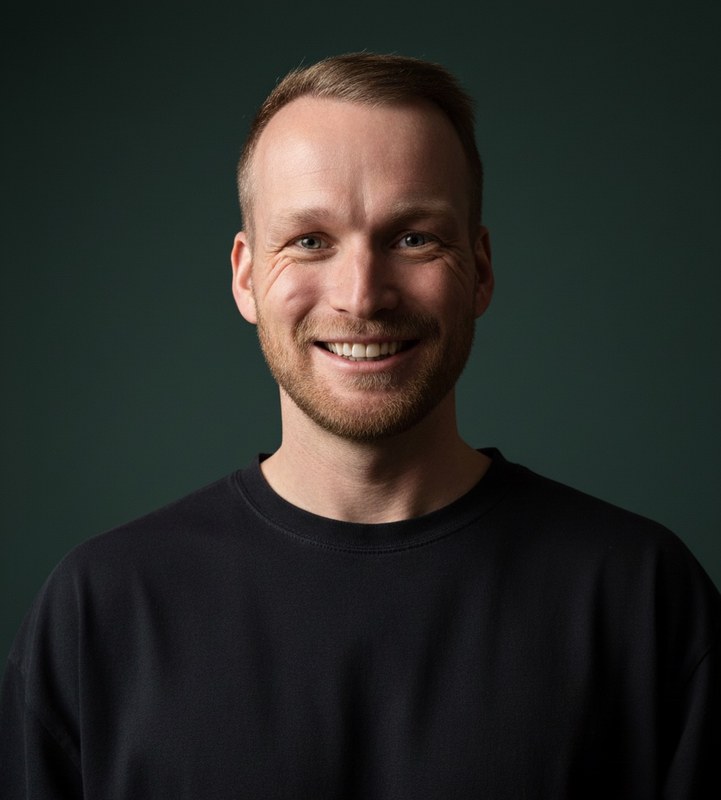
At Milano Cortina, Quentin Fillon Maillet won the 10km sprint in 22:53.1 and took relay gold with France. That took him to eight Olympic medals, five of them gold, making him the most decorated French Winter Olympian and putting him level with the fencers Philippe Cattiau and Roger Ducret at the top of French Olympic history.
The statistic that actually describes him is quieter: he has been an Olympic medallist in every biathlon format there is.
Five formats, one engine, different problems
Biathlon is not one race. The formats differ in duration, in how misses are punished, and therefore in how you are allowed to pace.
- Sprint. 10km, about 23 minutes, two shooting bouts, a 150m penalty loop per miss.
- Pursuit. 12.5km, start order and gaps set by the sprint, four bouts, 150m loop per miss.
- Individual. 20km, closer to 50 minutes, four bouts, and one full minute added per miss.
- Mass start. 15km, everyone off together, four bouts, 150m loop per miss.
- Relay. Four legs, spare rounds allowed before any penalty loop.
A 150m penalty loop costs somewhere around 22 to 25 seconds. A minute costs a minute. So the individual is a different sport from the sprint in one specific sense: the price of arriving at the range slightly too hot is roughly triple.
That is a pacing problem, and pacing problems are threshold problems.
The number underneath all five
Across durations from 23 to 50 minutes, the intensity that decides the race is the one you can hold without going into debt, your lactate threshold. Above it, everything is borrowed and the bill arrives on the range. Below it, you can ski hard and still shoot.
The skill Fillon Maillet has demonstrated for a decade is knowing where that line sits in each format and racing just under it, then converting whatever is left in the final loop.
Set your own threshold zones from a tested threshold heart rate:
Laktatschwellen-HF
165bpm
Rad-LTHR
| Zone | Bereich | Was es trainiert |
|---|---|---|
| Z1 | Aktive Regeneration ≤ 132 bpm | Lockeres Kurbeln zur Erholung; spült die Beine durch. RPE 1–2, sehr leicht. |
| Z2 | Grundlagenausdauer 133–147 bpm | Aerobe Basis und Fettstoffwechsel. RPE 3–4, Dauertempo. |
| Z3 | Tempo 148–153 bpm | Aerobe Ausdauer, gleichmäßige Arbeit im 'Sweet Spot'. RPE 5–6, angenehm hart. |
| Z4 | Schwelle 154–163 bpm | Laktatschwelle; nachhaltig hart. RPE 7–8, 20–60 min Limit. |
| Z5a | VO₂max 164–168 bpm | Maximale aerobe Leistung. RPE 9, 3–8 min Belastungen. |
| Z5b | Anaerobe Kapazität 169–175 bpm | Anaerobe Kapazität, kurz und scharf. RPE 9–10, 30 s–3 min. |
| Z5c | Neuromuskulär ≥ 176 bpm | Sprintleistung und neuromuskulärer Antrieb. RPE 10, all-out. |
Z1 · Aktive Regeneration. Lockeres Kurbeln zur Erholung; spült die Beine durch. RPE 1–2, sehr leicht.
Z2 · Grundlagenausdauer. Aerobe Basis und Fettstoffwechsel. RPE 3–4, Dauertempo.
Z3 · Tempo. Aerobe Ausdauer, gleichmäßige Arbeit im 'Sweet Spot'. RPE 5–6, angenehm hart.
Z4 · Schwelle. Laktatschwelle; nachhaltig hart. RPE 7–8, 20–60 min Limit.
Z5a · VO₂max. Maximale aerobe Leistung. RPE 9, 3–8 min Belastungen.
Z5b · Anaerobe Kapazität. Anaerobe Kapazität, kurz und scharf. RPE 9–10, 30 s–3 min.
Z5c · Neuromuskulär. Sprintleistung und neuromuskulärer Antrieb. RPE 10, all-out.
- LTHR-basierte Zonen sind individueller als %HRmax, weil sie an deiner tatsächlichen Schwelle ansetzen und nicht an einer Altersschätzung. Rad- und Lauf-LTHR unterscheiden sich, also teste jede Sportart separat.
- Feldtest: Warm dich auf und fahre oder laufe dann einen harten 30-minütigen Zeitfahr-Solo. Deine LTHR ist die durchschnittliche Herzfrequenz der letzten 20 Minuten (Friels Protokoll).
Ein PDF mit deinen personalisierten Ergebnissen, plus QR-Code, um sie jederzeit wieder zu öffnen.
Threshold heart rate is a far better anchor than max heart rate for anything lasting 20 minutes or more, because it moves with your fitness while HRmax barely moves at all. LTHR vs %HRmax zones covers the difference, and how to find your lactate threshold covers the test.
Versatility is not a talent, it is a distribution
The French biathlon programme has been the best in the world for several seasons, and it keeps producing athletes who are neither pure sprinters nor pure distance skiers. That is what a broad training distribution does: a very large aerobic base that makes the 50-minute race survivable, plus enough high-intensity work to contest a 23-minute one, rather than specialising early into either.
The same pattern shows up in every sport in this series. Mathieu van der Poel races three disciplines off one engine. Matthew Brennan sprints off a track pursuiter's base. The specialists win more often in one narrow place. The generalists win in more places.
What we can and cannot say about his week
His personal training diary is not public, so this is not a place to invent one. What is documented is the outcome, and the outcome is unambiguous: nine Olympic podiums across every format, at 33, in a sport where the range punishes anyone who has misjudged their pacing by five seconds.
What you can steal from it
- Pace to your threshold, not to your rivals. The athlete who arrives at the hard part with something in reserve does the hard part better.
- Know the price of going too hard. In biathlon it is 25 seconds or a minute. In your event it is a blown final third. Work out what it costs you before you decide how hard to start.
- Use threshold heart rate as the anchor. LTHR zones move with your fitness. HRmax does not.
- Train the range, not the specialty. Being good from 20 to 50 minutes is a broader base than being excellent at one of them.
- Longevity is the real record. Eight medals across three Games is a training-load management story as much as a talent story.
More in this series: Sturla Holm Lægreid, Johannes Klæbo and Jessie Diggins.
Sources
- Wikipedia
- Olympics.com on his sprint gold
- Olympics.com on the relay gold and the record
- Nordic Mag on becoming France's most decorated Olympian
- IBU competition formats
Cover photo by Pavel Hrdlička, CC BY-SA 4.0, via Wikimedia Commons.
