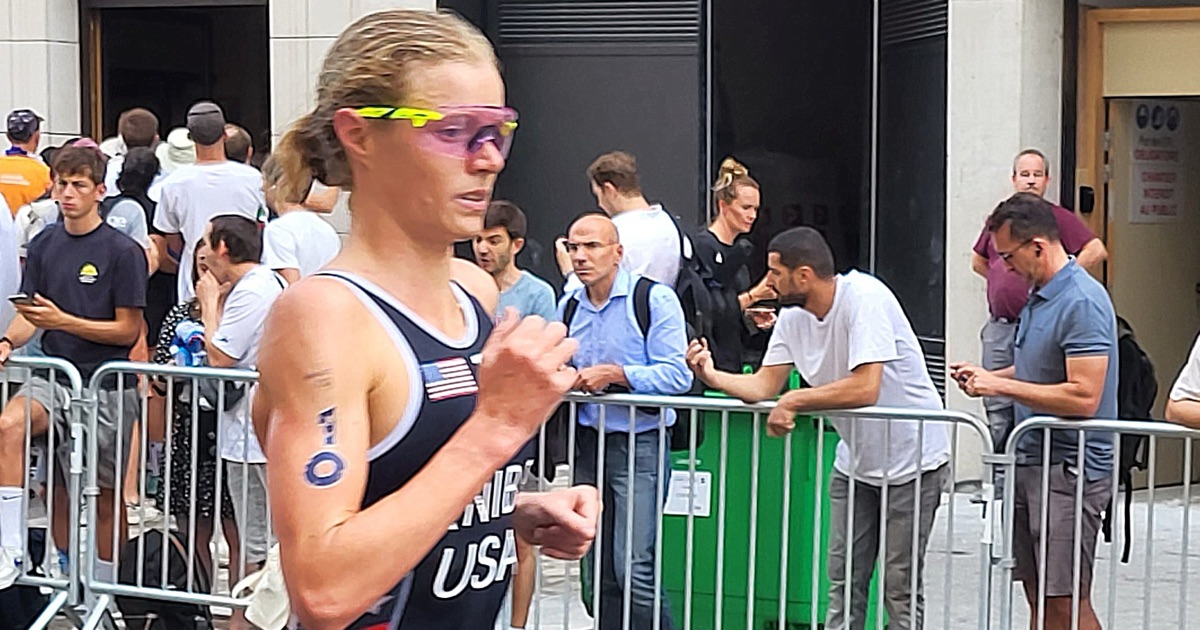
How Taylor Knibb Trains (and Why She Let the Leader Go in Kona)
Taylor Knibb won Kona 2026 in 8:36:29 a year after overheating 3 km from the line. The lesson: race your own limits, not the athlete beside you.
Taylor Knibb won the 2026 Ironman World Championship in Kona in 8:36:29, a year after she overheated and stopped with less than 3 km to go. On 10 October 2026 she swam 52:55, rode the fastest bike split of the day in 4:40:07 and ran a 2:57:46 marathon. When defending champion Solveig Løvseth passed her at mile 21, Knibb let her go. Løvseth collapsed about a kilometer from the finish, and Knibb ran past into the lead. The difference between the two years was where she pointed her attention: at her own body, not at the woman beside her.
The cyclist who also runs
Knibb ran track and cross country at Cornell for four years and swam on the team in her senior year. She has won four Ironman 70.3 world titles (2022, 2023, 2024 and 2026), raced two Olympics in triathlon with a mixed relay silver in Tokyo and Paris, and also rode the Paris Olympic time trial. In June 2026 she won a US national time trial title, and a few weeks before Kona she placed 13th at the UCI world time trial championships.
She has been coached by Dan Lorang since 2024. Her actual training week is not public, so this post does not invent one.
Kona 2025: the limit came early
In 2025 Knibb rode 4:31:00 and started the run 1:43 ahead of Lucy Charles-Barclay. She was still leading with two miles left when she slowed to a walk and sat down on the Queen Ka'ahumanu Highway. Løvseth passed her and won. Medics recorded a core temperature of 104.9°F (40.5°C), taken a while after she had stopped.
Her own summary: "I overheated myself completely with less than 3k to go." Later: "I learned that my limits are closer than I thought." After this year's race she named the mistake. She had "stopped listening to my body and tried to battle it out with a woman."
Kona 2026: let her pass
This time she rode about nine minutes slower than in 2025, still the fastest bike of the day, and led Charles-Barclay by 3:06 into T2. Before the race she had said: "The moment you start racing your competitors is the moment you collapse."
By the Energy Lab, around 23 km into the run, she was struggling. She walked the aid stations to drink and cool down. When Løvseth came past at mile 21, Knibb let her go: "I just had to let her pass me." She credited advice from Paula Newby-Fraser, who told her that when the choice is between racing and reaching the finish, you take the finish. Løvseth faded to eighth in 9:02:09. Knibb won by 3:05 over Laura Philipp.
Heart rate is how amateurs listen to their body
"Listening to your body" sounds vague. In the heat it has a measurable signal. At the same power or pace, heart rate climbs as you get hotter and lose fluid, a process called cardiovascular drift. In one lab study, trained cyclists riding at 35°C saw heart rate rise 11% between minute 15 and minute 45, while it barely moved at 22°C. The athlete next to you does not show up on that number. Your own physiology does.
That is why a heart rate ceiling built from your own maximum is a better race-day guide in the heat than a pace you saw on a cool training day. Set your five zones and decide in advance which zone you will not leave on the bike and the run.
최대 심박수
185bpm
| 존 | 범위 | 무엇을 단련하는가 |
|---|---|---|
| Z1 | 회복 93–111 bpm | 능동적 회복과 워밍업; 피로를 더하지 않으면서 혈류를 촉진합니다. 매우 쉬움, RPE 1–2. 자유로운 대화가 가능하고 숨이 거의 차지 않습니다. |
| Z2 | 지구력 111–130 bpm | 유산소 기초, 지방 산화, 모세혈관 밀도를 키우는 가장 기본이 되는 존입니다. 편안함, RPE 3–4. 완전한 문장으로 말할 수 있습니다. |
| Z3 | 템포 130–148 bpm | 유산소 능력과 근지구력; '적당히 힘든' 꾸준한 운동입니다. 힘이 들어감, RPE 5–6. 짧은 문장만 가능합니다. |
| Z4 | 역치 148–167 bpm | 젖산 역치, 즉 지속 가능한 레이스 페이스의 상한선입니다. 힘듦, RPE 7–8. 한 번에 몇 마디 정도만 가능합니다. |
| Z5 | VO₂max 167–185 bpm | 짧고 강한 인터벌을 통한 최대 유산소 파워와 VO₂max입니다. 매우 힘듦에서 최대까지, RPE 9–10. 말을 할 수 없습니다. |
Z1 · 회복. 능동적 회복과 워밍업; 피로를 더하지 않으면서 혈류를 촉진합니다. 매우 쉬움, RPE 1–2. 자유로운 대화가 가능하고 숨이 거의 차지 않습니다.
Z2 · 지구력. 유산소 기초, 지방 산화, 모세혈관 밀도를 키우는 가장 기본이 되는 존입니다. 편안함, RPE 3–4. 완전한 문장으로 말할 수 있습니다.
Z3 · 템포. 유산소 능력과 근지구력; '적당히 힘든' 꾸준한 운동입니다. 힘이 들어감, RPE 5–6. 짧은 문장만 가능합니다.
Z4 · 역치. 젖산 역치, 즉 지속 가능한 레이스 페이스의 상한선입니다. 힘듦, RPE 7–8. 한 번에 몇 마디 정도만 가능합니다.
Z5 · VO₂max. 짧고 강한 인터벌을 통한 최대 유산소 파워와 VO₂max입니다. 매우 힘듦에서 최대까지, RPE 9–10. 말을 할 수 없습니다.
- 존은 최대 심박수의 단순 백분율입니다(Z1 50–60%에서 Z5 90–100%까지). 설정하기 쉽지만 HRmax가 정확하다는 전제가 필요합니다.
- 심박수는 운동 강도보다 1–3분 늦게 반응하며, 더위나 탈수 상태에서 위로 표류합니다('심박수 표류'). 따라서 짧고 강한 노력은 느낌으로 다루세요.
당신의 개인 맞춤 결과가 담긴 PDF와, 언제든 다시 열 수 있는 QR 코드.
Enter your maximum heart rate and the calculator splits it into five zones as percentages of that maximum. Use a maximum you have actually seen in a hard effort; the max heart rate calculator gives a formula estimate if you have none. If heart rate rises into a higher zone while your pace or power holds steady, the heat is costing you. That is the moment to slow down, cool off at the next aid station and let people go, before you have no choice. The aerobic decoupling calculator shows the same drift after a long session.
What you can steal from it
- Race your own numbers. Knibb's 2025 collapse came from matching a rival, not from a bad plan.
- Set a heart rate ceiling before race day. Build it from your own heart rate zones, not from someone else's pace.
- Expect drift in the heat. The same effort costs more beats per minute after an hour in hot weather.
- Walk the aid stations when you need to. A world champion did it on the way to the title.
- Let people go. Løvseth passed Knibb with about 8 km left and finished eighth.
- Your limit is closer than you think in heat. Knibb's own words, after 104.9°F.
More in this series: Lucy Charles-Barclay, Kristian Blummenfelt, Alex Yee, Mark Allen, and the rest of the 2026 Kona podium: Laura Philipp and Julie Derron, and men's champion Vincent Luis.
Sources
- Slowtwitch race report
- Slowtwitch post-race
- NBC Sports results
- NBC Sports preview
- Wikipedia profile
- Slowtwitch forum, Kona 2025 bike split
- Lafrenz et al. 2008, ambient temperature and cardiovascular drift
Cover photo by Rz98, CC BY-SA 4.0, via Wikimedia Commons.
