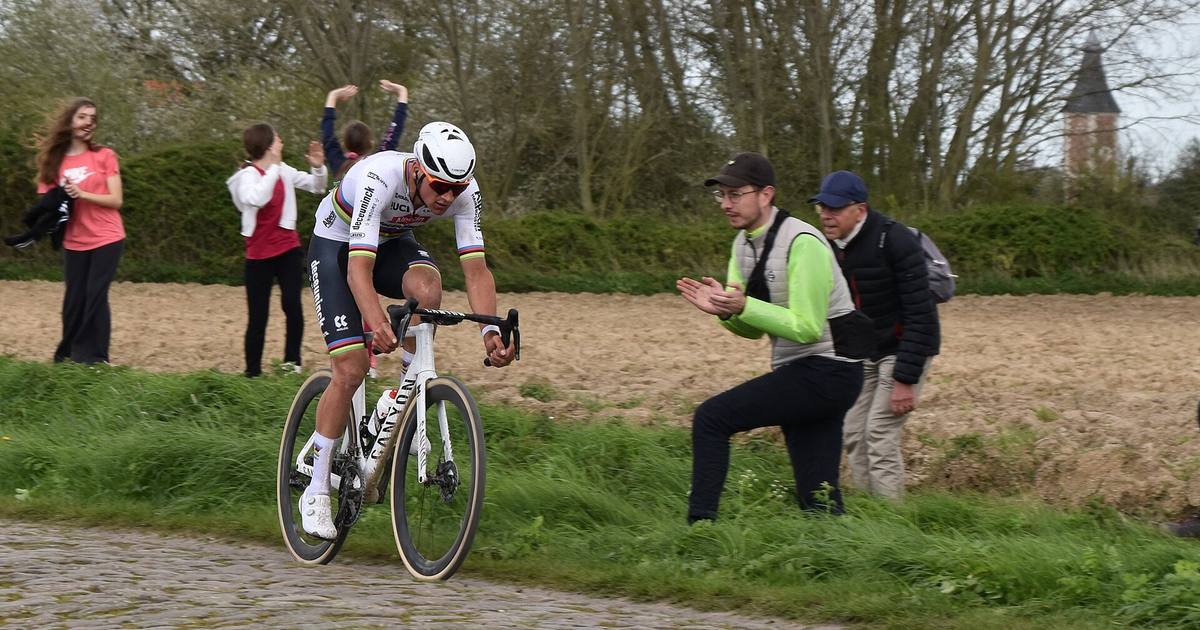
How Mathieu van der Poel Trains (One Engine, Three Sports)
Van der Poel is world champion on the road, in cyclocross and on gravel. How one engine spans three disciplines, and why he isn't sure cyclocross helps his road form.
Mathieu van der Poel has been world champion on the road, in cyclocross and on gravel, racing all three in one year. The lesson for a normal cyclist is one broad engine instead of a narrow one. The complication: he isn't convinced his winter of cyclocross helps his road form at all.
A racing bloodline and a three-sport year
His father Adrie won a Tour of Flanders and a cyclocross world title. His grandfather was Raymond Poulidor, the "eternal second" of the Tour de France. Van der Poel's year runs cyclocross in winter, the cobbled classics in spring, and MTB and gravel around them. In early 2026 he won a record eighth cyclocross world title, and he holds road (2023) and gravel (2024) world titles. He is not a mountain-bike world champion, despite racing MTB at the top level.
Cross might not help the road
Van der Poel has said he doesn't need cyclocross to reach his best road level, and has wondered aloud whether he might be better without it, using the winter for recovery and uninterrupted road blocks. Cyclocross gives him race intensity and world-class handling, but costs recovery and interrupts the long blocks that build peak road form.
The engine underneath
One giant aerobic engine plus rare explosive power unites the three disciplines. Independent analyses of his race files put his sustained power in exceptional territory, but these are third-party estimates, not team numbers, so take the exact watts loosely.
The number you can measure on yourself is functional threshold power.
FTP
250W
Sweet Spot
220–235W
88–94 % FTP
| Sone | Område | Hva den trener |
|---|---|---|
| Z1 | Aktiv restitusjon ≤ 138 W | Restitusjon; ruller beina uten å legge på belastning. RPE 1–2, veldig lett. |
| Z2 | Utholdenhet 139–188 W | Aerob grunnform, fettforbrenning, hele-dagen-fart. RPE 3–4, samtalefart. |
| Z3 | Tempo 189–225 W | Aerob utholdenhet og muskulær effektivitet. RPE 5–6, behagelig hardt. |
| Z4 | Terskel 226–263 W | Laktatterskel, FTP-arbeid, det vedvarende taket. RPE 7–8, 10–30 min drag. |
| Z5 | VO₂max 264–300 W | Maksimal aerob effekt; 3–8 min intervaller. RPE 9, veldig hardt. |
| Z6 | Anaerob kapasitet 301–375 W | Anaerob kapasitet; 30 s–3 min innsatser. RPE 9–10, nær maksimalt. |
| Z7 | Nevromuskulær effekt ≥ 376 W | Spurt- og nevromuskulær effekt. RPE 10, fulle spurter. |
Z1 · Aktiv restitusjon. Restitusjon; ruller beina uten å legge på belastning. RPE 1–2, veldig lett.
Z2 · Utholdenhet. Aerob grunnform, fettforbrenning, hele-dagen-fart. RPE 3–4, samtalefart.
Z3 · Tempo. Aerob utholdenhet og muskulær effektivitet. RPE 5–6, behagelig hardt.
Z4 · Terskel. Laktatterskel, FTP-arbeid, det vedvarende taket. RPE 7–8, 10–30 min drag.
Z5 · VO₂max. Maksimal aerob effekt; 3–8 min intervaller. RPE 9, veldig hardt.
Z6 · Anaerob kapasitet. Anaerob kapasitet; 30 s–3 min innsatser. RPE 9–10, nær maksimalt.
Z7 · Nevromuskulær effekt. Spurt- og nevromuskulær effekt. RPE 10, fulle spurter.
- Andrew Coggans syvsonemodell uttrykker hver sone som en prosentandel av Functional Threshold Power. Sweet Spot (220–235 W, 88–94 % FTP) ligger mellom Tempo og Terskel og gir en høy treningsstimulus for moderat tretthet.
- FTP er effekten du teoretisk kunne holdt i omtrent en time. Test på nytt hver 4.–6. uke; en utdatert FTP gjør hver sone feil.
En PDF med resultatene dine, pluss en QR-kode for å åpne dem igjen senere.
Set FTP from a test and your endurance, tempo, threshold and VO2max zones follow. Van der Poel's versatility is an enormous FTP plus a huge anaerobic ceiling on different surfaces. Build the threshold and it pays off in a gran fondo, a criterium or a gravel event.
Watts aren't the whole story
Van der Poel says cyclocross and mountain biking are more "honest," because the strongest rider usually wins, whereas road racing is "all tactics, power meters and race radios." A big FTP is necessary but not sufficient. Handling, positioning and decisions decide races too, and his off-road skills are why he is so hard to beat when a road race gets chaotic.
2026
Tadej Pogačar had his number in the biggest one-day races. After the eighth cyclocross world title, van der Poel won Omloop Het Nieuwsblad and E3 Saxo Classic. At Milan-San Remo he finished eighth, crashing inside the final 35 kilometres and then attacking on the Poggio only to be dropped by Pogačar. Second at the Tour of Flanders, again behind Pogačar. Fourth at Paris-Roubaix, which he won in 2025, after a puncture. At the Tour de France he won stage 9 and the final stage on the Champs-Élysées, the day Pogačar sealed his fifth overall title. Throughout, he stayed a year-round strength-training regular, for durability rather than bulk.
What you can steal from it
- Build one broad engine. FTP is the anchor that pays off across every kind of riding.
- Cross-train your handling. Gravel, MTB or cyclocross build skills that win chaotic races.
- More racing isn't automatically more fitness. Even van der Poel questions whether his cross season helps his road peak.
- Watts aren't everything. The strongest engine still loses to better tactics and handling.
More in this series: Tadej Pogačar, Jonas Vingegaard, Remco Evenepoel, Primož Roglič and Demi Vollering.
Sources
- Cycling Up To Date
- Cyclist Q&A
- Cyclingflash
- Cyclingnews
- 2026 UCI World Tour
- 2026 Milan-San Remo
- 2026 Paris-Roubaix
- FloBikes
- Wikipedia achievements list
Cover photo by Felouch Kotek, CC0, via Wikimedia Commons.
