How Primož Roglič Trains (the Ski Jumper Who Started Cycling at 22)
Roglič was a pro ski jumper who started cycling at 22, then won four Grand Tours. What the late switch teaches about starting a sport as an adult.
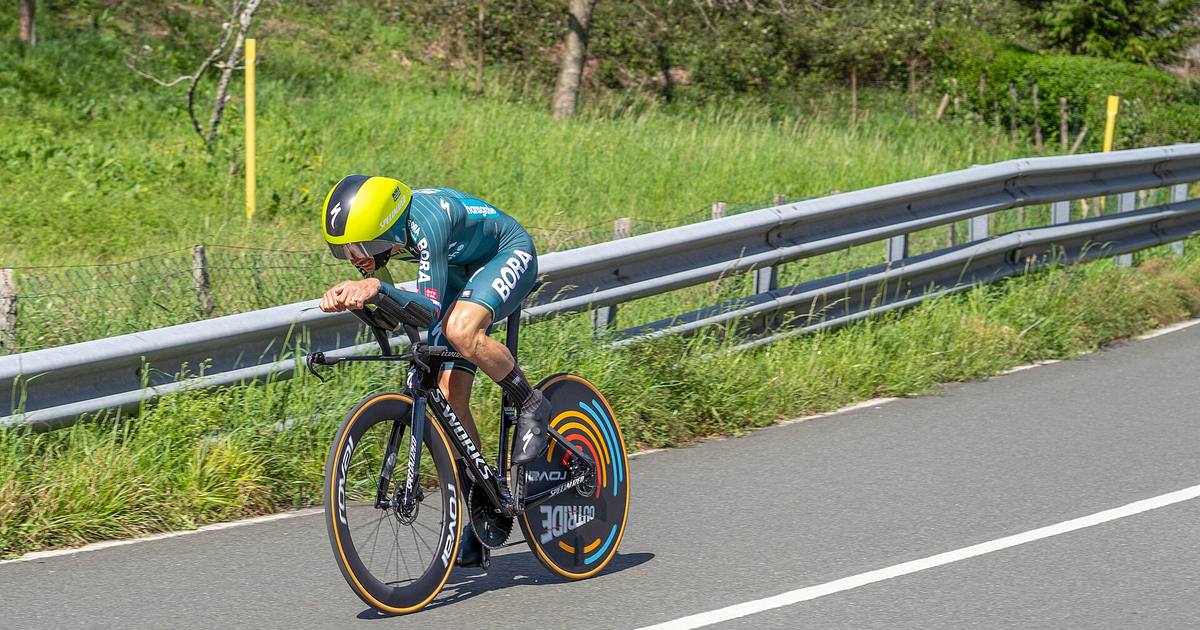
Every other cyclist in this series grew up racing bikes. Primož Roglič grew up flying off ski jumps. He was a professional ski jumper into his early twenties, took up cycling around 2012, turned pro in 2013, and has won four editions of the Vuelta a España and an Olympic time-trial gold. The best argument in the sport against having to start young.
An unusual path
Roglič competed in ski jumping to junior world-championship level. A bad crash in 2007 shook his nerve for it, and he drifted out of the sport before finding cycling in his early twenties. His own account is plain: it was time for a change, he liked cycling, why not.
The trained-athlete base converted fast. Years of structured elite training transferred into cycling far faster than starting from zero would. He credits specific carryover: "We did a lot of work with core strength, balance, flexibility and acrobatics. All that helps me on the bike." His precise descending is widely attributed to the nerve control ski jumping demands.
Building the engine from a trained base
Roglič's strength is the classic Grand Tour package: a huge aerobic engine, a strong time trial, and form tour after tour. The consistency comes from a repeatable process he tweaks incrementally. He works with long-time coach Marc Lamberts, who followed him to Red Bull-Bora-hansgrohe, and builds around altitude blocks.
For a crossover athlete, the base from another sport is not wasted. An ex-runner, ex-rower or ex-team-sport athlete carries a foundation that shortens the on-bike ramp-up. The tool for turning it into cycling zones without a lab is critical power, from two efforts:
Potência Crítica
229W
W′ (trabalho anaeróbico)
12.9kJ
12857 J
| Zona | Faixa | O que treina |
|---|---|---|
| Z2 | Resistência ≤ 183 W | Base aeróbica abaixo da CP. Fácil, RPE 3–4. |
| Z3 | Tempo 183–206 W | Trabalho estável sublimiar. Confortavelmente difícil, RPE 5–6. |
| Z4 | Limiar (CP) 206–229 W | Exatamente na potência crítica, estado estável metabólico máximo. Difícil, RPE 7–8. |
| Z5 | VO₂ / consumo de W′ 229–274 W | Acima da CP, cada segundo drena sua bateria de W′. Muito difícil, RPE 9. |
| Z6 | Anaeróbico ≥ 274 W | Forte depleção de W′; esforços máximos curtos. Máximo, RPE 10. |
Z2 · Resistência. Base aeróbica abaixo da CP. Fácil, RPE 3–4.
Z3 · Tempo. Trabalho estável sublimiar. Confortavelmente difícil, RPE 5–6.
Z4 · Limiar (CP). Exatamente na potência crítica, estado estável metabólico máximo. Difícil, RPE 7–8.
Z5 · VO₂ / consumo de W′. Acima da CP, cada segundo drena sua bateria de W′. Muito difícil, RPE 9.
Z6 · Anaeróbico. Forte depleção de W′; esforços máximos curtos. Máximo, RPE 10.
- A Potência Crítica é a assíntota da curva potência–duração: a maior potência que você consegue sustentar (em teoria) indefinidamente. W′ é a quantidade fixa de trabalho disponível acima da CP, sua 'bateria' anaeróbica.
- A CP de dois parâmetros precisa de dois esforços máximos de durações claramente diferentes (por exemplo, 3 min e 12 min). Esforços com durações muito próximas dão uma estimativa instável.
- A CP geralmente fica dentro de poucos por cento da FTP, mas acrescenta o W′, que modela por quanto tempo você consegue ficar acima do limiar.
Um PDF com seus resultados personalizados, além de um QR code para reabri-los a qualquer momento.
Do a short maximal effort and a longer one. You get the intensity you can sustain in a steady state plus the size of your anaerobic reserve above it. It is the same anchor an FTP gives, from a different pair of tests.
Resilience is part of the method
Roglič's career carries a long list of crashes: shoulders, abandons, a Giro exit. He keeps coming back and winning within months.
2026
Now 36, Roglič is skipping the 2026 Tour de France, where Red Bull-Bora-hansgrohe backs Remco Evenepoel and Florian Lipowitz, and building toward the Vuelta a España in late August, chasing a record fifth title at a race he already owns with four. Reporting frames him increasingly as a leader-and-mentor for the team's younger riders.
What you can steal from it
- It is not too late to start. Roglič did not ride competitively until his twenties and won four Grand Tours.
- Your old sport transfers. Aerobic fitness and trained discipline carry between sports.
- Anchor to a measured number early. Critical power from two efforts gives a crossover rider structured zones quickly.
- Trust a repeatable process. Refine incrementally instead of chasing a new trend each winter.
- Treat setbacks as interruptions. Crashes and missed blocks do not define a season.
More in this series: Remco Evenepoel, Mathieu van der Poel, Tadej Pogačar, Jonas Vingegaard and Demi Vollering.
Sources
Cover photo by Hugo LUC, CC BY-SA 4.0, via Wikimedia Commons.
