How Tadej Pogačar Trains (and Why He Got Heavier in 2026)
Pogačar's training: a mountain of easy Zone 2, a small dose of very hard work, gym strength, and a deliberate 2026 weight gain for the Classics.
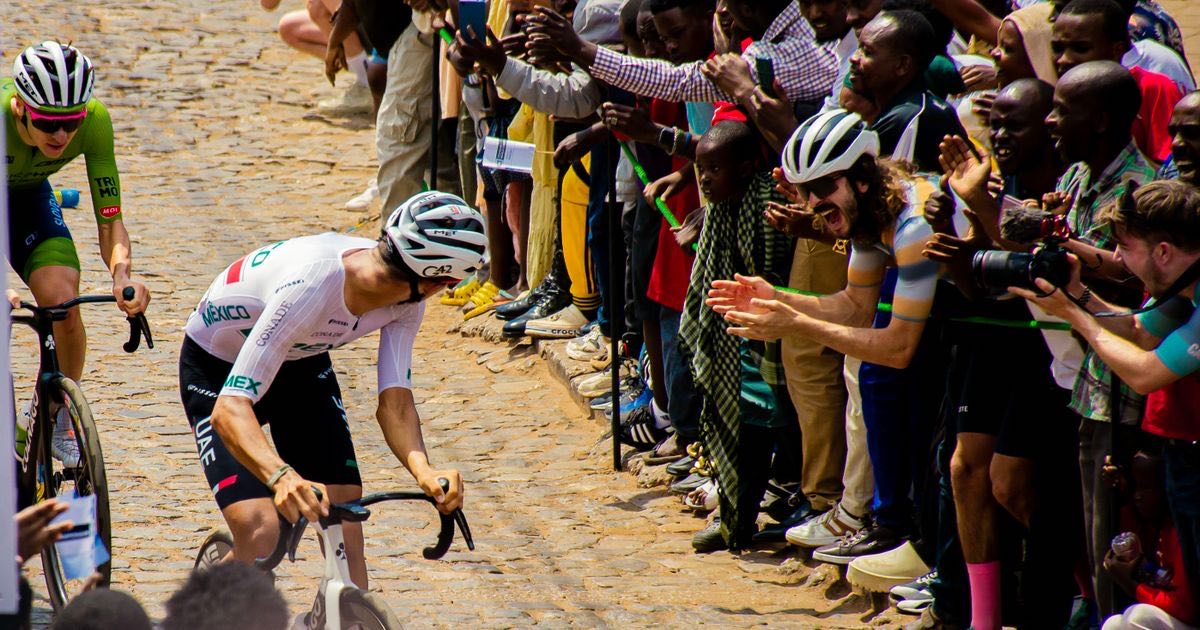
Tadej Pogačar trains in a way that looks boring: a huge volume of easy aerobic riding with a small slice of very hard work on top. His coach, the physiologist Iñigo San Millán, has said Pogačar spends roughly 80% of his training days in Zone 2. In 2026 he changed one ingredient and deliberately got heavier. Here is the method and what transfers.
The foundation: a mountain of Zone 2
Zone 2 is easy aerobic effort just below the first lactate threshold, the pace where you can still hold a conversation. San Millán's argument is that this intensity builds the cellular machinery of endurance: more and better mitochondria, denser capillaries, a greater ability to burn fat and clear lactate. Those adaptations respond to time spent, not to how much a session stings.
Most of your training should feel too easy. Ride everything at a moderate "gray zone" effort and you get the fatigue of hard training without the aerobic adaptation of easy training. Learn to train Zone 2 and hold it.
Holding it means knowing where the band sits for you.
Maximum heart rate
185bpm
| Zone | Range | Ano ang sinasanay |
|---|---|---|
| Z1 | Recovery 93–111 bpm | Active recovery at warm-up; pinapadaloy ang dugo nang hindi nadadagdagan ang pagod. Napakadali, RPE 1–2. Kayang mag-usap nang buong-buo, halos hindi hingal. |
| Z2 | Endurance 111–130 bpm | Aerobic base, fat oxidation at capillary density, ang pang-araw-araw na zone. Komportable, RPE 3–4. Kayang sumagot nang buong pangungusap. |
| Z3 | Tempo 130–148 bpm | Aerobic capacity at muscular endurance; 'medyo mahirap' na tuloy-tuloy na trabaho. May puwersa, RPE 5–6. Maiikling pangungusap lang. |
| Z4 | Threshold 148–167 bpm | Lactate threshold, ang pinakamataas na race-pace na kaya mong panatilihin. Mahirap, RPE 7–8. Iilang salita lang sa bawat pagkakataon. |
| Z5 | VO₂max 167–185 bpm | Maximal aerobic power at VO₂max sa pamamagitan ng maiikli at mahihirap na interval. Napakahirap hanggang maximal, RPE 9–10. Hindi makapagsalita. |
Z1 · Recovery. Active recovery at warm-up; pinapadaloy ang dugo nang hindi nadadagdagan ang pagod. Napakadali, RPE 1–2. Kayang mag-usap nang buong-buo, halos hindi hingal.
Z2 · Endurance. Aerobic base, fat oxidation at capillary density, ang pang-araw-araw na zone. Komportable, RPE 3–4. Kayang sumagot nang buong pangungusap.
Z3 · Tempo. Aerobic capacity at muscular endurance; 'medyo mahirap' na tuloy-tuloy na trabaho. May puwersa, RPE 5–6. Maiikling pangungusap lang.
Z4 · Threshold. Lactate threshold, ang pinakamataas na race-pace na kaya mong panatilihin. Mahirap, RPE 7–8. Iilang salita lang sa bawat pagkakataon.
Z5 · VO₂max. Maximal aerobic power at VO₂max sa pamamagitan ng maiikli at mahihirap na interval. Napakahirap hanggang maximal, RPE 9–10. Hindi makapagsalita.
- Ang mga zone ay simpleng porsyento ng maximum heart rate (Z1 50–60% hanggang Z5 90–100%). Madali itong itakda ngunit ipinapalagay na tumpak ang iyong HRmax.
- Ang heart rate ay nahuhuli sa effort nang 1–3 minuto at tumataas sa init o dehydration ('cardiac drift'), kaya tantyahin ang maiikli at mahihirap na effort sa pakiramdam.
PDF ng iyong personalized na resulta, may QR code para buksan muli kahit kailan.
Enter your maximum heart rate for the five %HRmax bands. Zone 2 is the second. Anchor it to a measured maximum rather than an age estimate if you have one, or use LTHR zones if you have tested your threshold.
Polarized, not gray
The 80/20 split is the polarized model. Pogačar's easy days are easy so that his hard days can be hard: short, sharp threshold and VO₂max efforts that drive the top end. Amateurs make easy rides a bit too hard and hard rides a bit too easy. The pros keep them apart.
Volume, altitude, and racing into form
On top of that sit the things a full-time professional can do that you cannot: very high weekly hours, altitude camps, and early-season races used as hard training rather than peak targets. He races himself into form and lets competition supply the highest-intensity stimulus. Form is built over months of volume, then sharpened.
Strength work in the gym
Pogačar does real strength training. The explosive, high-cadence seated attacks that win him races are partly built in the weight room, where heavy, low-rep work raises the force per pedal stroke without adding much bulk. Two focused gym sessions a week is the copyable version.
The 2026 change: bulking for the Classics
Over the 2025–26 winter Pogačar deliberately added muscle and weight for the spring Classics, where wins come from explosiveness, repeated maximal efforts and raw power over cobbles and short steep climbs (Flanders, Liège-Bastogne-Liège), not from being feather-light on a 40-minute pass.
After the Tour de Romandie he said: "I'm not going to deny that I weigh more than normal. But I feel good on the bike." He also joked, "Maybe I also overdid it a bit with the gym. I really enjoyed it and got fully into it." UAE's Joxean Matxin played it down: you shouldn't "get too hung up on a kilo or two in a cyclist."
The concept is periodized body composition. He builds muscle and accepts extra weight for the one-day races, then trims gym load and adjusts nutrition to get lighter for the grand tours. His nutritionist Gorka Prieto frames the goal as power-to-weight ratio, not a number on the scale: lean and low in body fat, but strong enough to stay healthy. For 2026 the stated direction is more strength and more intensity on top of the same aerobic base.
What you can steal from it
- Make most of your riding easy. Set your bands with the heart-rate, power or pace calculators, then stay in them.
- Keep easy easy and hard hard. A polarized week beats a week of moderate sameness.
- Think power-to-weight, not scale weight. Climbing is decided by watts per kilogram. Build the engine rather than under-eat.
- Don't try to peak year-round. Build a base, sharpen for goal events, let your body change with the season.
- Add a little strength work. Two gym sessions a week.
For the same era from the opposite temperament, read how Jonas Vingegaard trains: fewer race days, measured thresholds, a more clinical plan.
More riders in this series: Remco Evenepoel, Mathieu van der Poel, Primož Roglič and Demi Vollering.