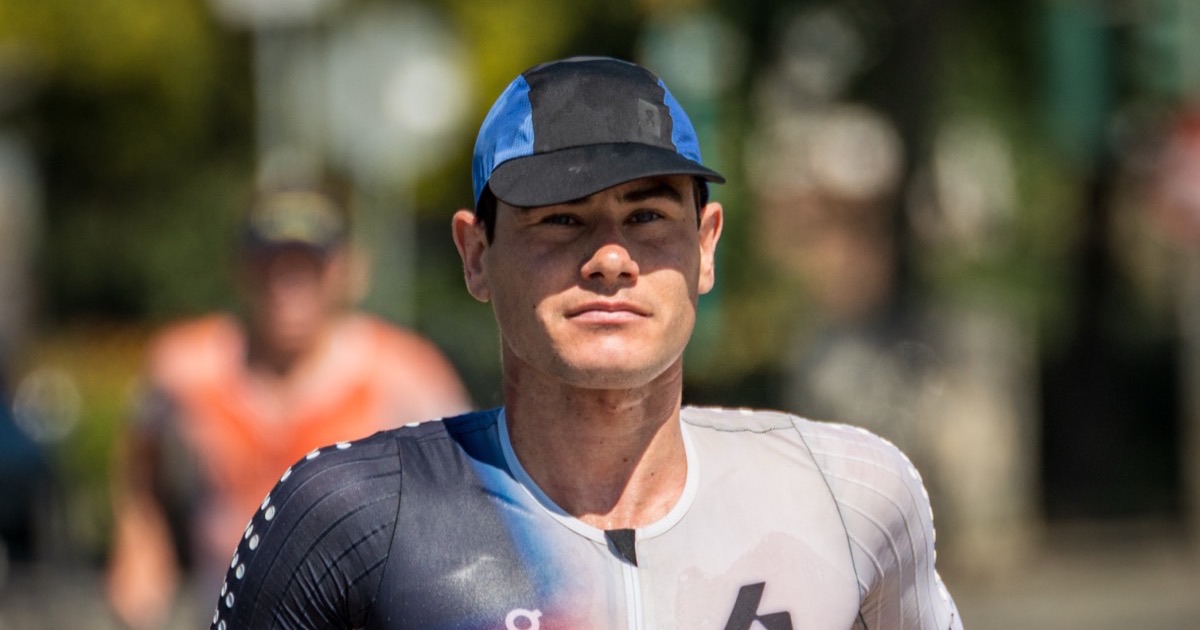
How Gustav Iden Trains (and Why His Season Builds Slowly)
Gustav Iden ran the fastest marathon at Kona 2026 to finish second. How a rolled ankle, a slow build and a few threshold sessions shaped his season.

Gustav Iden finished second at the Ironman World Championship in Kona on 10 October 2026 in 7:49:03, 1:35 behind Vincent Luis, with the fastest marathon of the day: 2:36:58. He did it after a three-minute drafting penalty, and the result won him the 2026 Ironman Pro Series title and its $200,000 bonus. In spring his season looked like a slow climb out of an injury. The lesson is in that climb: fitness comes back at its own speed, and he judges it by a handful of threshold sessions, not by how he feels in March.
The race: the field came back to him
Iden swam 50:10 and was 27th out of the water. On the bike he was penalized for not dropping back fast enough after a pass. "The air went a little bit out of me when I got a drafting penalty," he said. "In my opinion, it was a little bit stupid." He started the marathon more than nine minutes behind leader Magnus Ditlev and was sixth at mile 11, 6:53 down.
From there he passed Matthew Marquardt, then his training partner Kristian Blummenfelt in the Energy Lab, then Gregory Barnaby around mile 19, and finally Ditlev at the mile 21 aid station. Luis was already gone. "It was a roller coaster of a day," Iden said.
It was his second Kona podium. He won in 2022 in 7:40:24, a course record at the time, with a 2:36:15 run.
A season built out of an injury
The 2026 build did not start well. Iden rolled an ankle in the winter, and it lingered. "The rolled ankle took way longer than I expected," he told Slowtwitch. "I had pain well into Ironman Texas."
His results track the recovery: 12th at 70.3 Oceanside, 8th at Ironman Texas, second behind Casper Stornes at a heat-shortened Ironman Frankfurt, fourth at the 70.3 World Championship in Nice, then second in Kona. Each race a little closer.
He has done this before. In January 2024 he called 2023 "the worst year of my career and of my life in general." His mother had died of cancer, and an Achilles problem had bothered him for "almost half a year." With running off the table he swam and posted the best swim numbers of his career. In Kona he raced in a suit honoring his mother.
Two or three sessions that count
Iden trains in the Norwegian group's system, explained in the Blummenfelt post: controlled work at and just below threshold, measured, repeated through the season. What Iden adds is how he reads it. "Our training philosophy involves a lot of threshold work throughout the season," he said before Kona. "When you only have two or three of those before a race, you need to nail everything."
The first of those key sessions before Kona went badly. "The first one wasn't as good as I'd hoped. I had high expectations, and that messed with my head a little." The next one, an over-distance swim and bike on a Saturday and a 40 km run the following day, was "much better." He described heat the same way as fitness: "In the same way I'm building into the season, I'm building into the heat."
His exact training week is not public. What is public is the yardstick: repeatable threshold sessions, compared over weeks, and patience when one of them goes wrong.
An amateur can track a build the same way with a stand-alone running test. Race a 5k or 10k flat out every few weeks and turn the time into a VDOT, Jack Daniels' single fitness number from a race result. A rising VDOT across a season is your version of Iden's 12th, 8th, 2nd:
VDOT
49.8
Danielsのランニングフィットネススコア
| ゾーン | 範囲 | 鍛えられるもの |
|---|---|---|
| E | イージー/ロング 4:54–5:53 /km | 有酸素的土台、毛細血管、脂質代謝。週間ボリュームの大半。 RPE 3〜4、会話可能。 |
| M | マラソン 4:26–4:51 /km | マラソン特化の持久力とエコノミー。 RPE 5〜6、定常。 |
| T | スレッショルド 4:16–4:28 /km | 乳酸性作業閾値。快適にきついテンポとクルーズインターバル。 RPE 7、約1時間のレース強度。 |
| I | インターバル 3:51–4:01 /km | VO₂max。3〜5分のきついレップ。 RPE 9、きつい。 |
| R | レペティション 3:19–3:42 /km | スピード、エコノミー、ランニングパワー。完全休息を伴う短く速いレップ。 RPE 9〜10、速くコントロールされている。 |
E · イージー/ロング. 有酸素的土台、毛細血管、脂質代謝。週間ボリュームの大半。 RPE 3〜4、会話可能。
M · マラソン. マラソン特化の持久力とエコノミー。 RPE 5〜6、定常。
T · スレッショルド. 乳酸性作業閾値。快適にきついテンポとクルーズインターバル。 RPE 7、約1時間のレース強度。
I · インターバル. VO₂max。3〜5分のきついレップ。 RPE 9、きつい。
R · レペティション. スピード、エコノミー、ランニングパワー。完全休息を伴う短く速いレップ。 RPE 9〜10、速くコントロールされている。
- あなたのVDOT 49.8 は、現在のランニングフィットネスを捉える単一の数値です(ランニングエコノミーで調整した「VO₂max」)。すべてのトレーニングペースがこれから導かれます。
- VDOTは最近のきついレースまたはタイムトライアル1本から得られます。全力で走った結果、理想的には5 km以上を使ってください。ハーフマラソンや10 kmが最も安定した推定値を与えます。
- 単位の切り替えを使うとマイルあたりのペースで読めます。フィットネスが上がったら再びレースしてください。VDOTとすべてのペースが更新されます。
- これらはダニエルズの個別のトレーニングペース(E, M, T, I, R)であり、連続したゾーンではありません。それぞれのペースを特定の目的のために走ります。きついペース(T・I・R)の間の空白は意図的なもので、不具合ではありません。
パーソナライズされた結果のPDFと、いつでも再表示できるQRコード付き。
Use a fresh, stand-alone race. An Ironman marathon is not a fair input: Iden ran his 2:36:58 after 3.8 km of swimming and 4:17:10 on the bike, so its VDOT would understate his running fitness. If you are coming back from a layoff, keep the weekly load increase modest; the training load calculator shows your ramp rate.
What you can steal from it
- Judge fitness by repeatable tests. A stand-alone 5k or 10k every few weeks turns into a VDOT you can track.
- One bad session is data, not a verdict. Iden's first key Kona session went poorly and he raced to second.
- Let the comeback show in results, not in March. His 2026 went 12th, 8th, 2nd, 4th, 2nd.
- Swim when you cannot run. An injury that stops running does not have to stop training.
- Build into the heat like you build fitness. Gradually, over weeks, and not on race week.
- Keep racing your own pace after a setback. He was sixth and 6:53 down at mile 11 after a penalty.
More in this series: Kristian Blummenfelt, Vincent Luis, Matthew Marquardt, women's champion Taylor Knibb, Alex Yee, Lucy Charles-Barclay and Mark Allen. The system: the Norwegian method.
Sources
- Slowtwitch race report
- Big Island Now
- NBC Sports
- Slowtwitch Pro Series
- Slowtwitch pre-race interview
- TRI247 Frankfurt
- Triathlete UK Nice results
- Triathlon Today
- Colorado Triathlete 2022
Cover photo by Jürgen Matern, CC BY-SA 4.0, via Wikimedia Commons.
