How Julie Derron Trains (and Why She Runs Without a Watch)
Julie Derron took third at Kona 2026 on her debut, running the marathon without a watch. How Brett Sutton's athlete races by feel, and how to learn it.
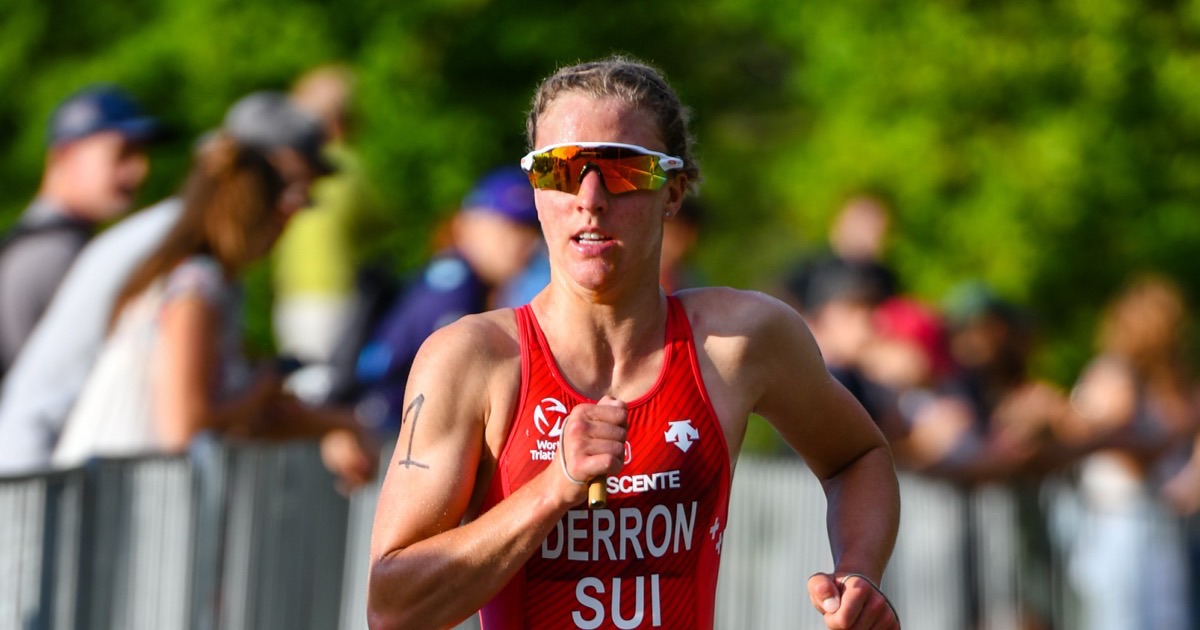
Julie Derron finished third at the Ironman World Championship in Kona on 10 October 2026, in 8:46:25, on her debut at the distance's biggest race. She did it after a three-minute drafting penalty on the bike and a run she nearly walked in, and she ran that marathon the way she runs every race: without a watch. The Swiss Olympic silver medalist paces by feel. Her career shows what makes that work, and what it takes to earn it.
The race: 53 minutes, a penalty, a walk
Derron swam 53:09, about 90 seconds behind Lucy Charles-Barclay, and started the bike "super motivated." Then came a three-minute drafting penalty. "I tried to use that time wisely: refuel and just calm down," she said afterwards. Her bike split was 4:49:35 including the stop, and she began the marathon in eighth.
She moved through the field until around 16 km, when it got "really tough." She walked. "I thought I would finish the race walking." She ate and drank as much as she could, jogged, then ran again, and was fourth with about 3 km to go before taking the last podium place in the closing kilometers. Her run split was 2:58:54. "It was a rollercoaster of a day. I'm super proud; I didn't give up."
Taylor Knibb won in 8:36:29, with Laura Philipp second.
No watch, no target pace
Before Kona, Derron explained that she runs without a watch and regulates effort by what she feels she can sustain and by what the race in front of her is doing. "You have to race the race ahead of you." She and coach Brett Sutton plan scenarios, such as how much time she could close on particular rivals, instead of setting a pace per kilometer.
It worked a month earlier at the Ironman 70.3 World Championship in Nice, where she finished second to Knibb with a 1:13:04 half marathon. "I never aim for a time to run. I aim to run as fast as I can. It never crossed my mind to run a 1:13."
Kona tested the same approach from the other side. Feel did not stop her blowing up at 16 km. It did tell her when to stop, fuel and rebuild.
Feel is trained, not innate
Derron did her first triathlon at about six, came through the Swiss short-course system, and won Olympic silver in Paris on 31 July 2024. She trains in St. Moritz in Sutton's group, the coach behind Nicola Spirig and Daniela Ryf. In one interview she described a sample Monday: a 90-minute swim at 7 a.m., a bike session of hill repeats for strength, then a second, endurance-focused ride, with the next day built around running. Her weekly hours and run volume are not public.
What the record does show is more than two decades in the sport, repeating the same key sessions until each effort has a known feel. That is the part an amateur can copy. Perceived effort is a real physiological signal: in the talk test research by Persinger, Foster and colleagues, the point where speaking comfortably stops lines up closely with the ventilatory threshold. Your body already reports where the thresholds are. You have to learn to read it.
The fastest way to learn is to train with numbers first. Set heart rate zones from your lactate threshold heart rate, run each zone often enough to know what it feels like, and the watch becomes a check on your feel instead of a replacement for it.
乳酸性作業閾値心拍数
165bpm
サイクリングのLTHR
| ゾーン | 範囲 | 鍛えられるもの |
|---|---|---|
| Z1 | アクティブリカバリー ≤ 132 bpm | リカバリー走。脚をほぐします。 RPE 1〜2、非常に楽。 |
| Z2 | エンデュランス 133–147 bpm | 有酸素的土台と脂質代謝。 RPE 3〜4、一日中続けられるペース。 |
| Z3 | テンポ 148–153 bpm | 有酸素的持久力、「スイート」な定常運動。 RPE 5〜6、快適にきつい。 |
| Z4 | スレッショルド 154–163 bpm | 乳酸性作業閾値、持続可能なきつさ。 RPE 7〜8、20〜60分が限界。 |
| Z5a | VO₂max 164–168 bpm | 最大有酸素パワー。 RPE 9、3〜8分の運動。 |
| Z5b | 無酸素性容量 169–175 bpm | 無酸素性容量、短く鋭く。 RPE 9〜10、30秒〜3分。 |
| Z5c | 神経筋 ≥ 176 bpm | スプリントパワーと神経筋の駆動。 RPE 10、全力。 |
Z1 · アクティブリカバリー. リカバリー走。脚をほぐします。 RPE 1〜2、非常に楽。
Z2 · エンデュランス. 有酸素的土台と脂質代謝。 RPE 3〜4、一日中続けられるペース。
Z3 · テンポ. 有酸素的持久力、「スイート」な定常運動。 RPE 5〜6、快適にきつい。
Z4 · スレッショルド. 乳酸性作業閾値、持続可能なきつさ。 RPE 7〜8、20〜60分が限界。
Z5a · VO₂max. 最大有酸素パワー。 RPE 9、3〜8分の運動。
Z5b · 無酸素性容量. 無酸素性容量、短く鋭く。 RPE 9〜10、30秒〜3分。
Z5c · 神経筋. スプリントパワーと神経筋の駆動。 RPE 10、全力。
- LTHRベースのゾーンは、年齢推定ではなく実際の閾値に基づくため、%HRmaxよりも個別性が高くなります。サイクリングとランニングのLTHRは異なるので、各競技を別々にテストしてください。
- フィールドテスト:ウォームアップ後、きつい30分のソロタイムトライアルを走るか漕ぎます。LTHRは最後の20分の平均心拍数です(Frielのプロトコル)。
パーソナライズされた結果のPDFと、いつでも再表示できるQRコード付き。
Friel's running zones put zone 2 at 85 to 89% of LTHR and zone 4 at 95 to 99%. Spend a few weeks noting breathing, talking and leg feel at each band. Then run some sessions with the screen covered, and check the file afterward. When your guesses keep landing in the right zone, you can trust your feel on race day. More on the model in Friel heart rate zones.
What you can steal from it
- Learn your zones with a monitor, then race by feel. Numbers calibrate perception; they do not have to run the race.
- Cover the screen on some runs. Guess the zone, check the data afterward, repeat until the guesses are right.
- Use the talk test. When full sentences stop coming easily you are near threshold, too hard for an Ironman marathon.
- Race people and gaps, not a pace. Derron plans how much time she can close, then responds to the race.
- When it goes wrong, fuel and rebuild. She walked, ate and drank at 16 km, and still finished third.
- Treat a penalty as an aid station. Three minutes standing still became three minutes of refueling.
More in this series: Taylor Knibb, Laura Philipp, men's champion Vincent Luis, Lucy Charles-Barclay, Kristian Blummenfelt, Alex Yee and Mark Allen.
Sources
- Triathlete
- Triatlón Noticias results
- Big Island Now
- TRI247
- Triatlón Noticias
- Slowtwitch
- Espace Triathlon
- Wikipedia profile
- Persinger et al. 2004
Cover photo by Granada, CC BY-SA 4.0, via Wikimedia Commons.
